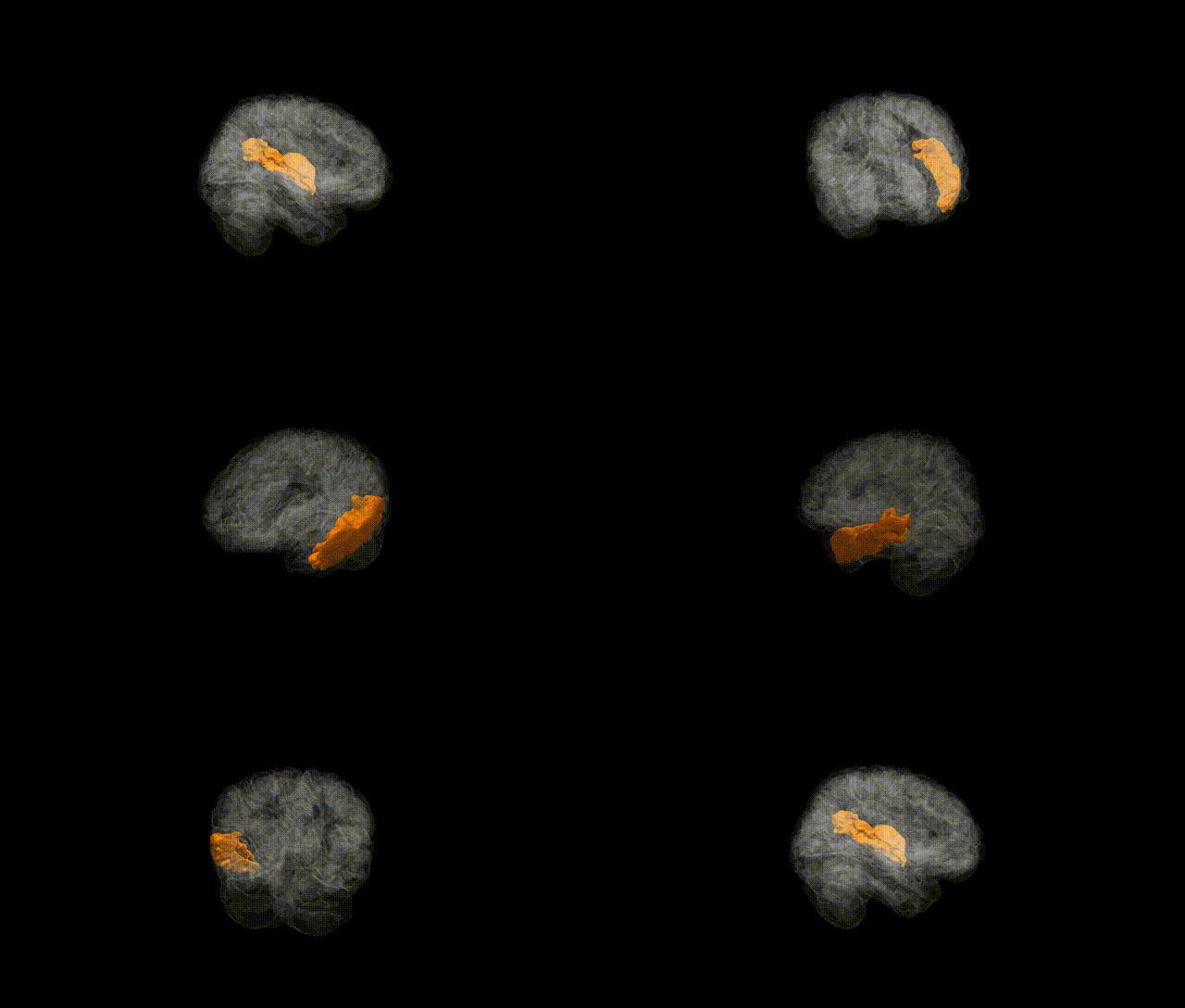
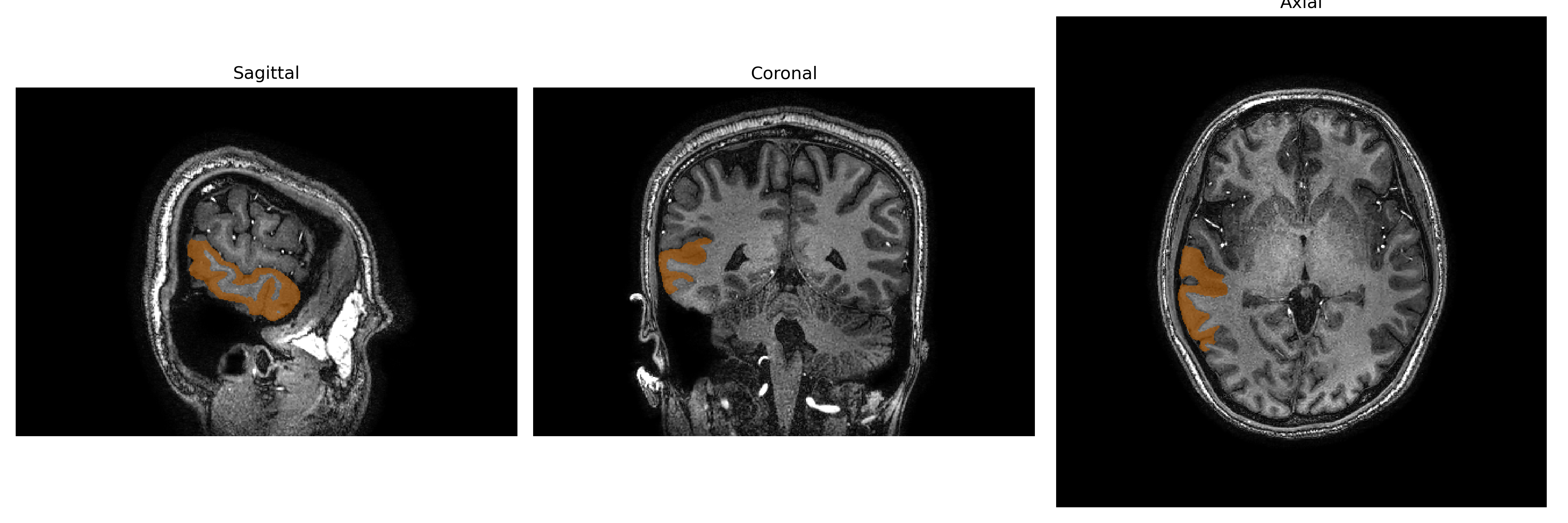
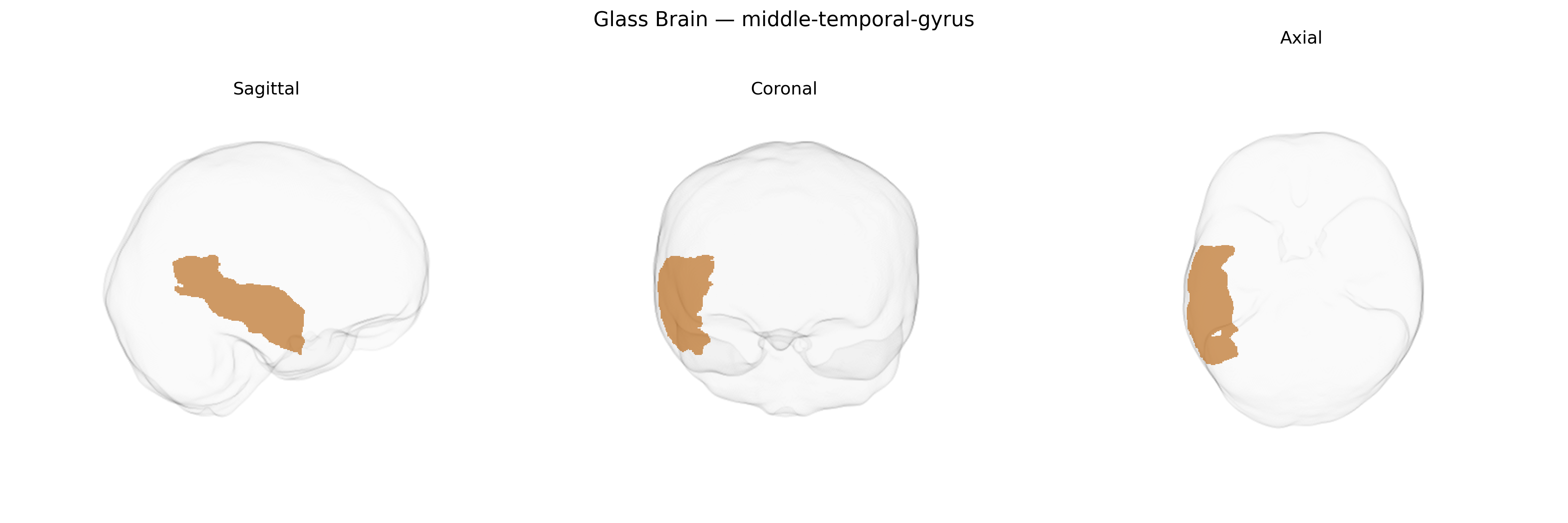
The right middle temporal gyrus (MTG) is a lateral neocortical region of the temporal lobe situated between the superior and inferior temporal gyri, extending from the temporal pole posteriorly toward the angular gyrus. Cytoarchitectonically, it contains portions of association cortex involved in higher-order sensory integration rather than primary sensory processing. Functionally, the right MTG participates in semantic processing, integration of visual and auditory information, social cognition (including aspects of theory of mind), and components of language comprehension with a right-hemisphere bias toward prosody and discourse-level processing. It also contributes to visual motion perception and recognition of complex stimuli such as faces and biological motion through its connectivity with occipitotemporal and parietal association areas. The right MTG is interconnected with the superior temporal sulcus, inferior parietal lobule, prefrontal association cortex, and limbic structures, supporting its role in multimodal integration and context-dependent interpretation of sensory input. Middle temporal gyrus
The right middle temporal gyrus (MTG), as defined in the brainCOLOR atlas, has been implicated in several genetic and GWAS-based associations largely through imaging genetics studies of cortical thickness, surface area, and functional connectivity. Variants in genes involved in synaptic function and neurodevelopment—such as BDNF, GRIN2B, CNTNAP2, and FOXP2—have been linked to structural or functional differences in temporal regions that include the right MTG, often in the context of language, semantic processing, and social cognition. Large-scale GWAS of cortical morphology (e.g., ENIGMA, UK Biobank–based studies) have identified multiple loci impacting temporal lobe measures, with signals near genes involved in neuronal migration, axon guidance, and glutamatergic signaling, though effects are highly polygenic and not specific to a single sulcus or gyrus. Genetic risk for schizophrenia, autism spectrum disorder, and major depressive disorder shows enrichment in networks encompassing the right MTG, including altered connectivity and gray-matter volume, suggesting that common risk variants exert part of their effect via this region’s role in social perception and language-related networks. Polygenic scores for educational attainment, cognitive ability, and reading/language traits have also been associated with interindividual variation in temporal cortex structure and function, again implicating the right MTG within broader temporal-parietal language and semantic systems rather than as an isolated genetic target.
Overview generated by GPT-4o (2026).
Region ID: 72
Hemisphere: Right
Atlas: brainCOLOR
Full Quality Version: Download MP4
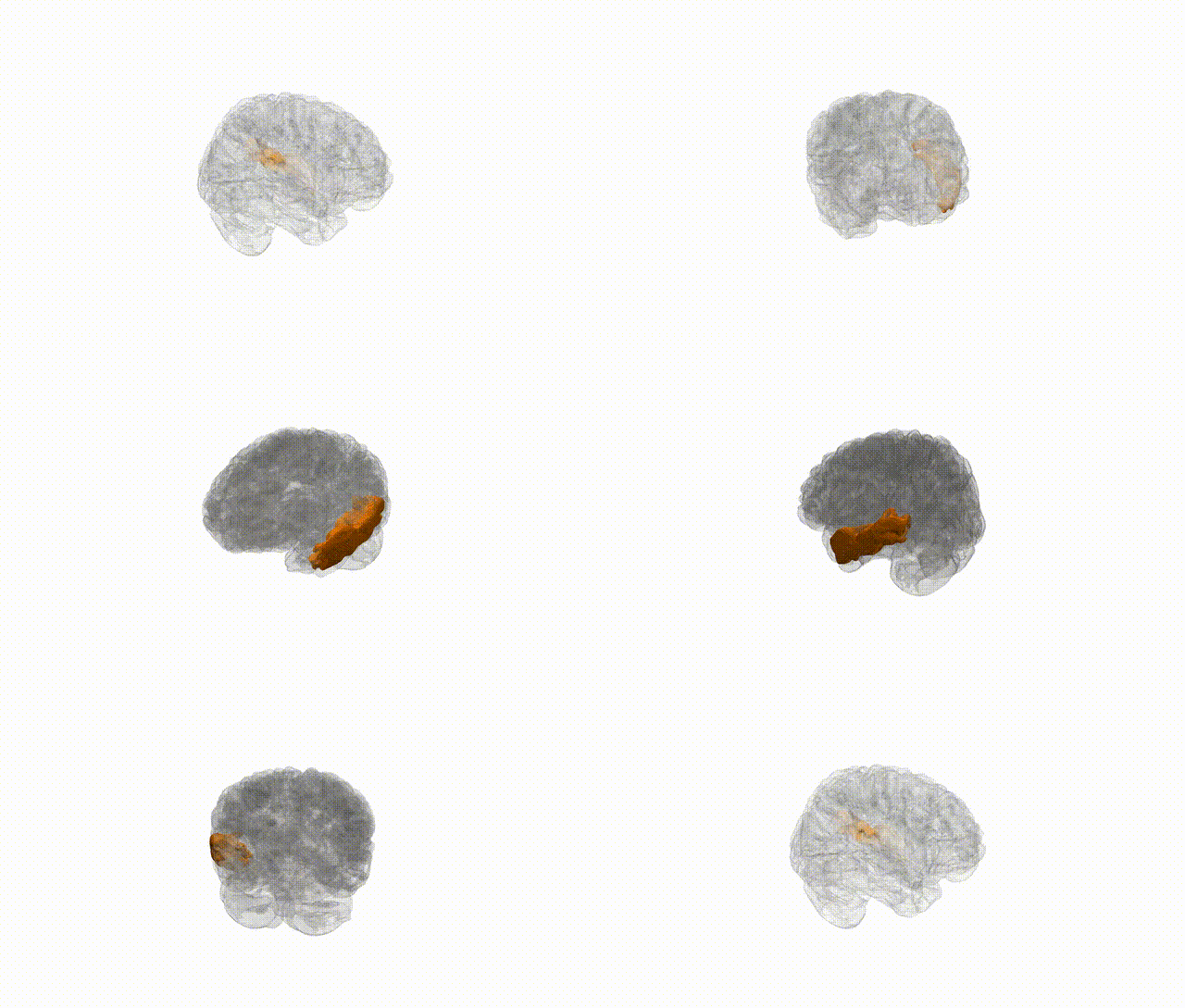
Full Quality Version: Download MP4
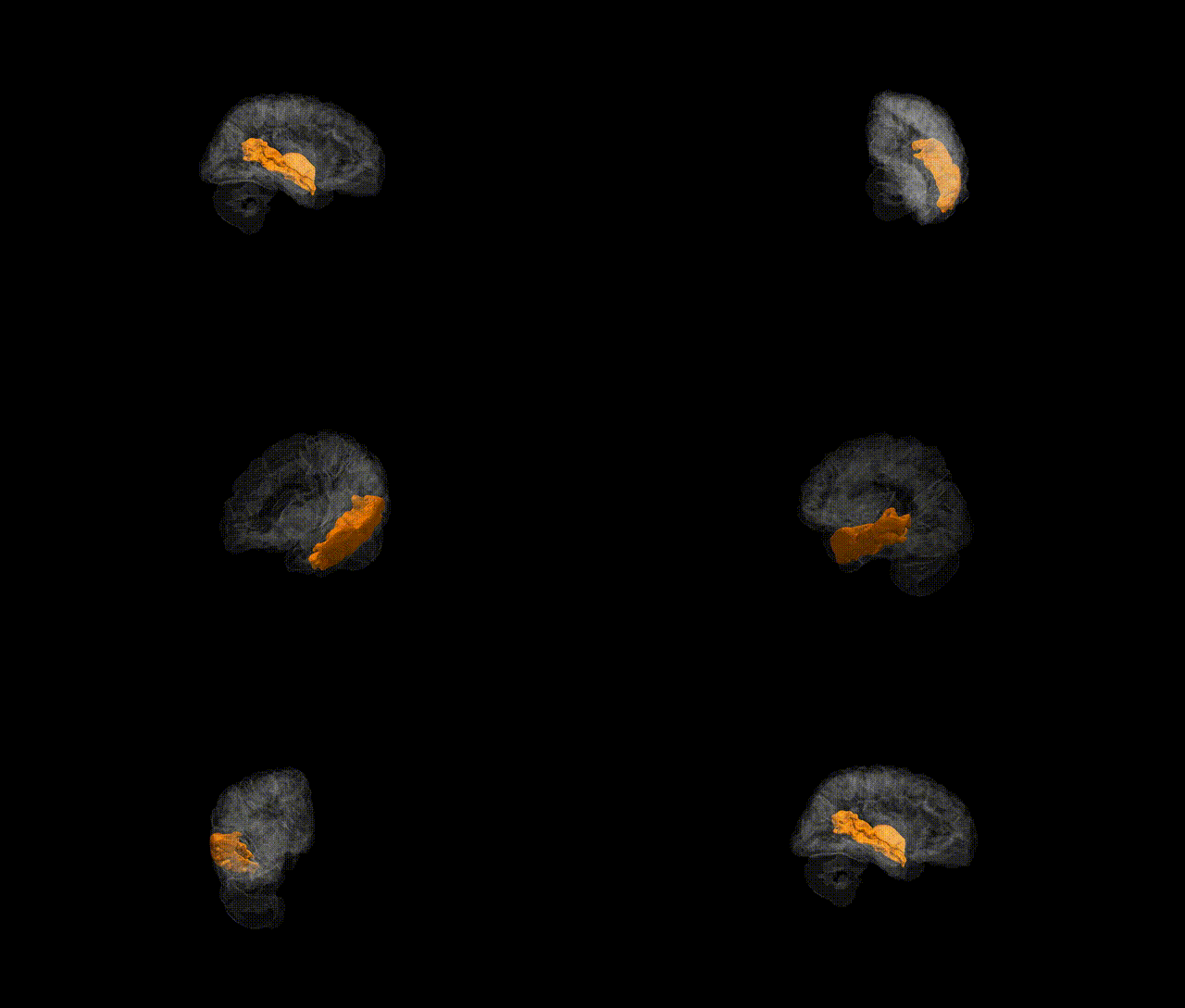
Full Quality Version: Download MP4
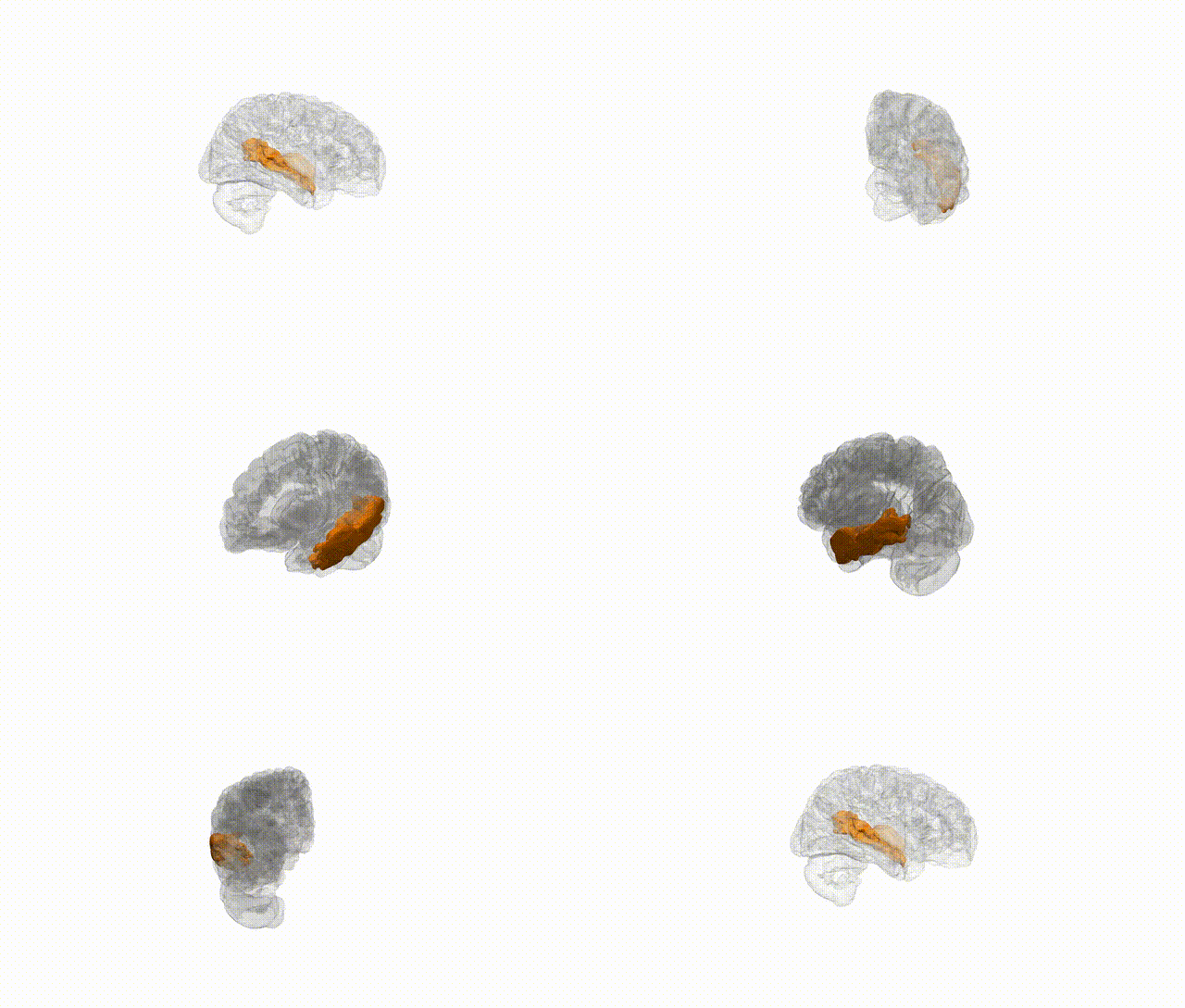
Full Quality Version: Download MP4
Wali Sidiqyar*, Gaurav Rudravaram*, Elyssa M. McMaster, Trent M. Schwartz, Adam M. Saunders, Kurt G. Schilling, Bennett A. Landman "Introducing SPINS: A Shared Public Visualization Library of Neuroanatomical Structures." Medical Imaging with Deep Learning- short paper
This resource is licensed under CC0 1.0 Universal (Public Domain).