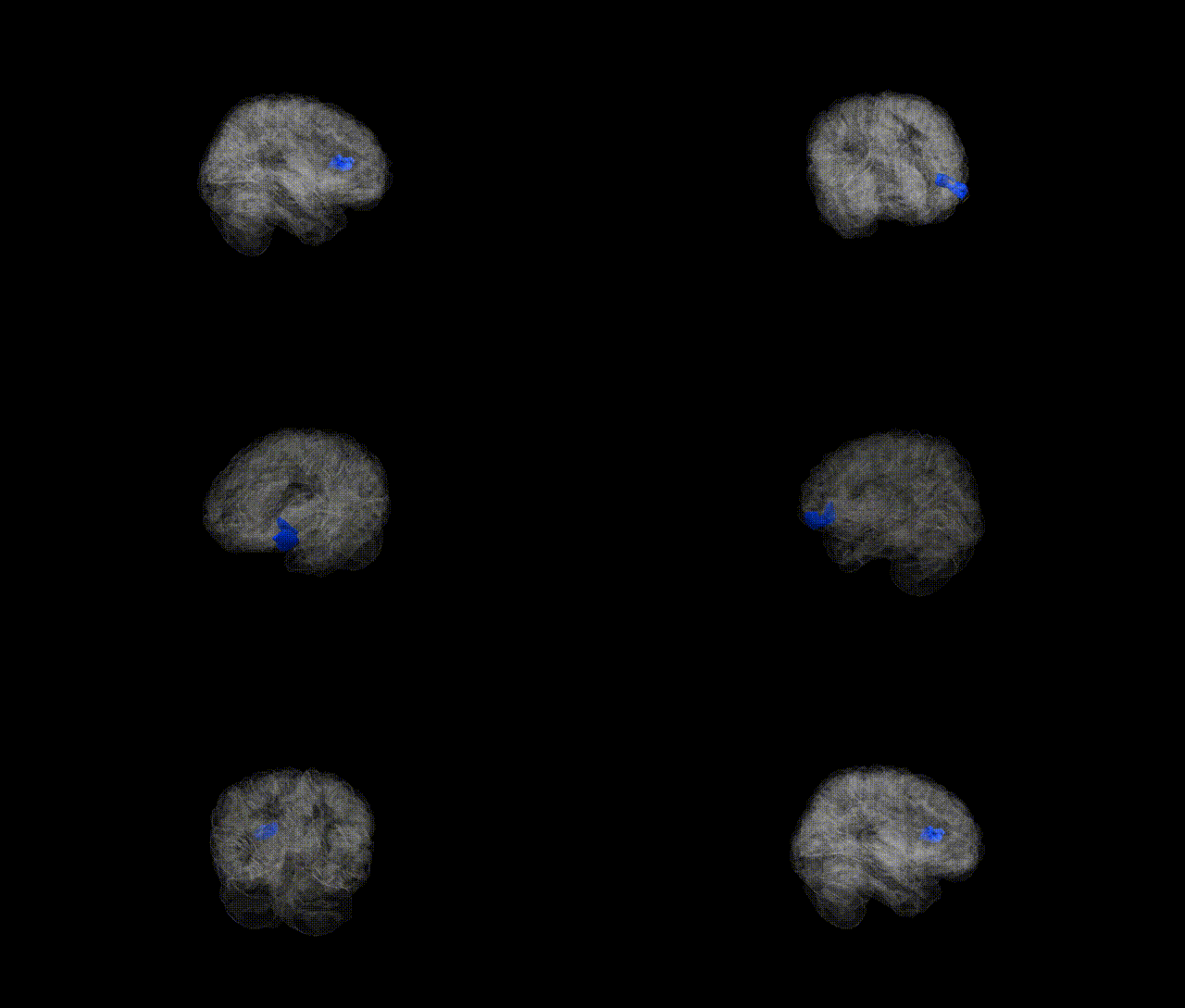
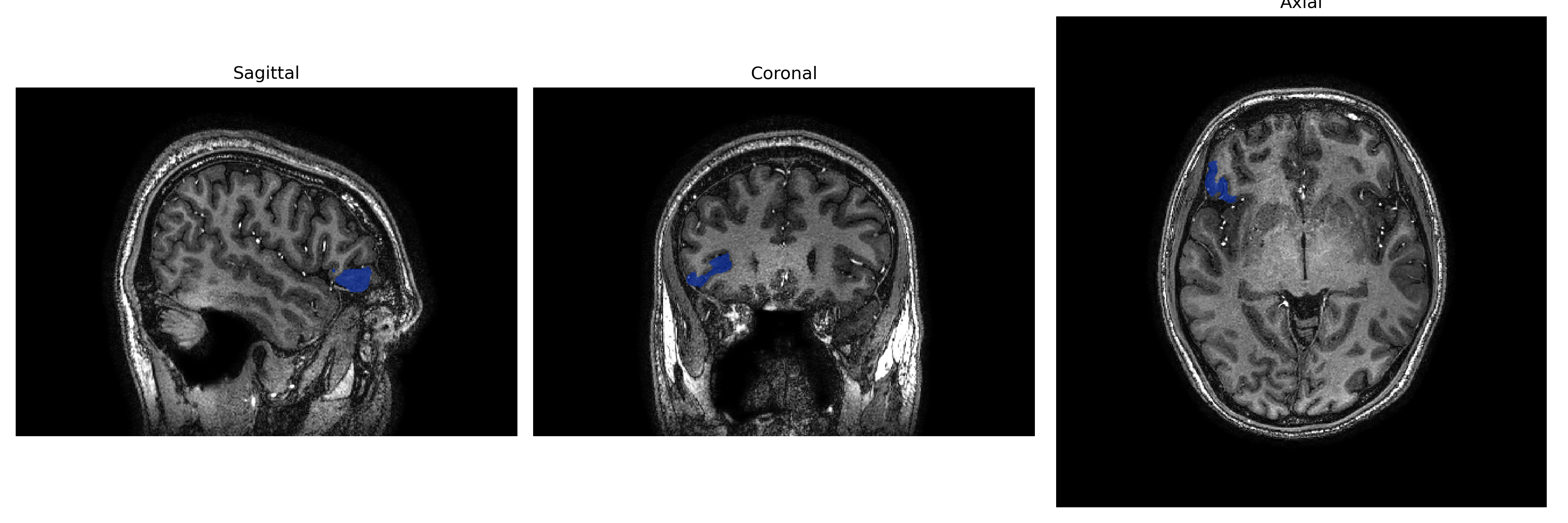
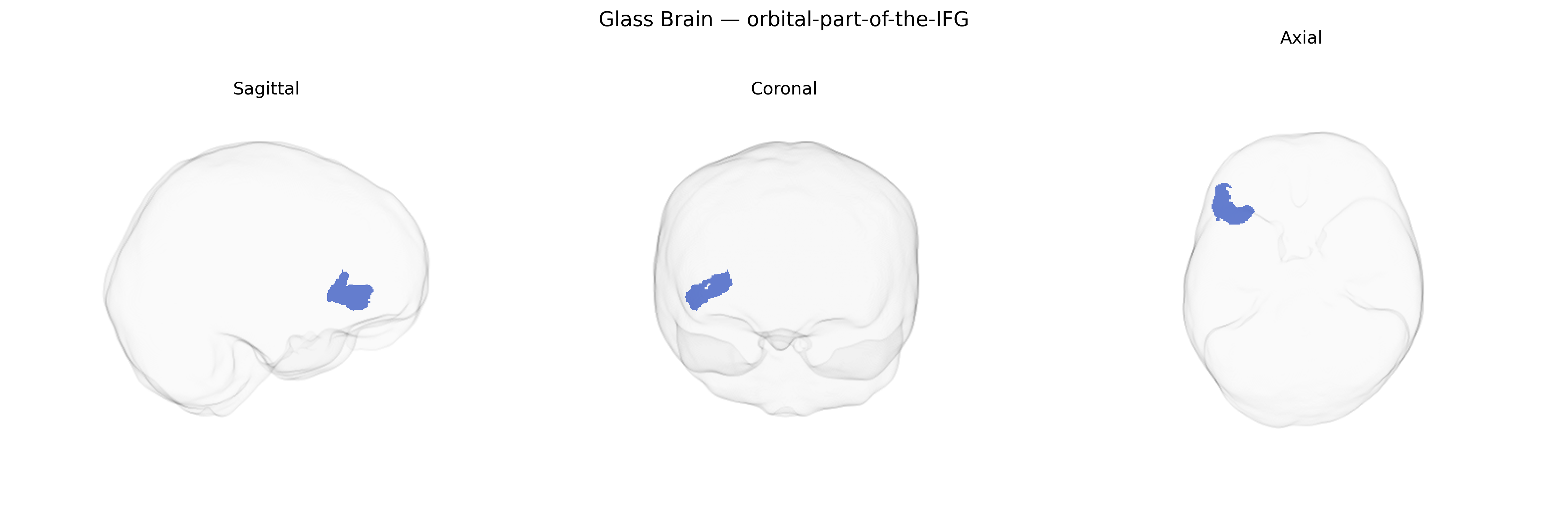
The Right orbital part of the inferior frontal gyrus (right orbital-part-of-the-IFG) is a ventral prefrontal cortical region located on the orbital (basal) surface of the frontal lobe, corresponding largely to portions of Brodmann areas 11, 12, and/or 47 within the orbitofrontal cortex. It lies inferior to the pars triangularis and pars opercularis of the inferior frontal gyrus, curving onto the orbital surface above the orbits and bordering the lateral orbital sulci. Cytoarchitectonically, this region is characterized by granular to dysgranular prefrontal cortex, with dense reciprocal connections to limbic structures (e.g., amygdala), sensory association cortices, and other prefrontal areas. Functionally, the right orbital IFG/orbitofrontal sector is implicated in reward valuation, affective decision-making, inhibitory control, and social-emotional processing, including evaluation of punishments, prediction of outcomes, and context-dependent updating of behavioral strategies. There is no direct Wikipedia article on the “orbital part of the inferior frontal gyrus” as a standalone entry; a closely related and encompassing structure is the Orbitofrontal cortex.
The right orbital part of the inferior frontal gyrus (IFG), as defined in the brainCOLOR Atlas, has been implicated in several genetic and imaging-genetics findings, though most evidence is indirect and based on broader inferior frontal or orbitofrontal measures rather than that specific parcel alone. GWAS of cortical surface area and thickness (e.g., ENIGMA, UK Biobank) have identified multiple loci influencing inferior frontal and orbitofrontal morphology, including variants near genes involved in synaptic development and neuronal migration (such as MIR137, HMGA2, and POU3F2), though parcel-specific hits for the right orbital IFG are not yet firmly established. Polygenic risk scores for psychiatric conditions—particularly major depressive disorder, bipolar disorder, and schizophrenia—have been associated with structural and functional variation in the right IFG and adjacent orbitofrontal regions, consistent with this area’s role in reward evaluation, affect regulation, and inhibitory control. Additionally, genes linked to externalizing behaviors and impulsivity (e.g., DRD2 and other dopaminergic pathway genes in candidate and imaging-genetics studies) show associations with functional activation and gray-matter variation in right IFG/orbitofrontal territories during tasks involving response inhibition and decision-making, and genetic risk for substance use disorders has been correlated with altered morphology and activity in this region. Overall, current evidence supports a polygenic influence on the structure and function of the right orbital IFG, with shared genetic architecture across mood, psychotic, and impulse-control–related traits, but highly specific parcel-level genetic associations for the brainCOLOR-defined region remain limited and are an active area of research.
Overview generated by GPT-4o (2026).
Region ID: 80
Hemisphere: Right
Atlas: brainCOLOR
Full Quality Version: Download MP4
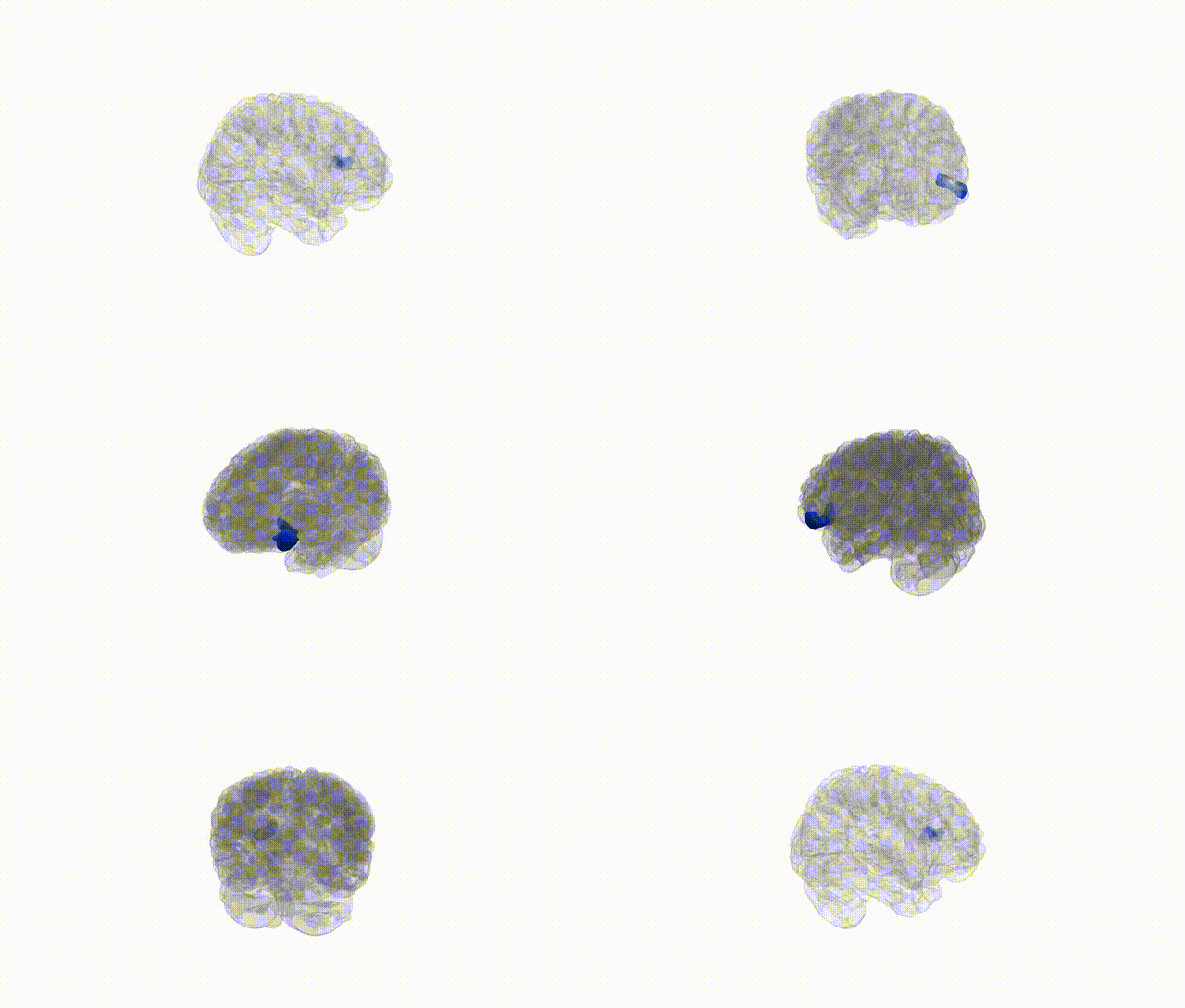
Full Quality Version: Download MP4
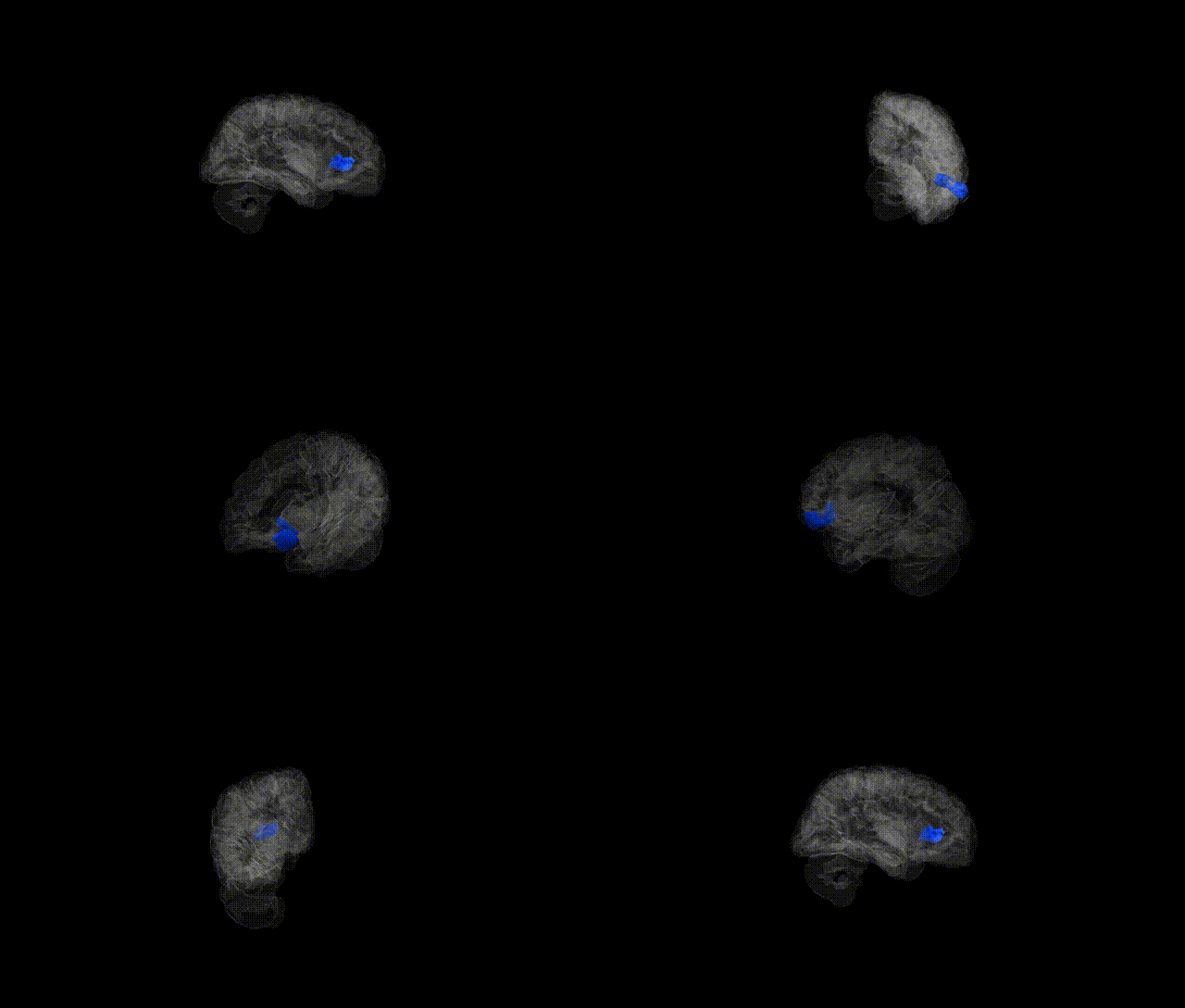
Full Quality Version: Download MP4
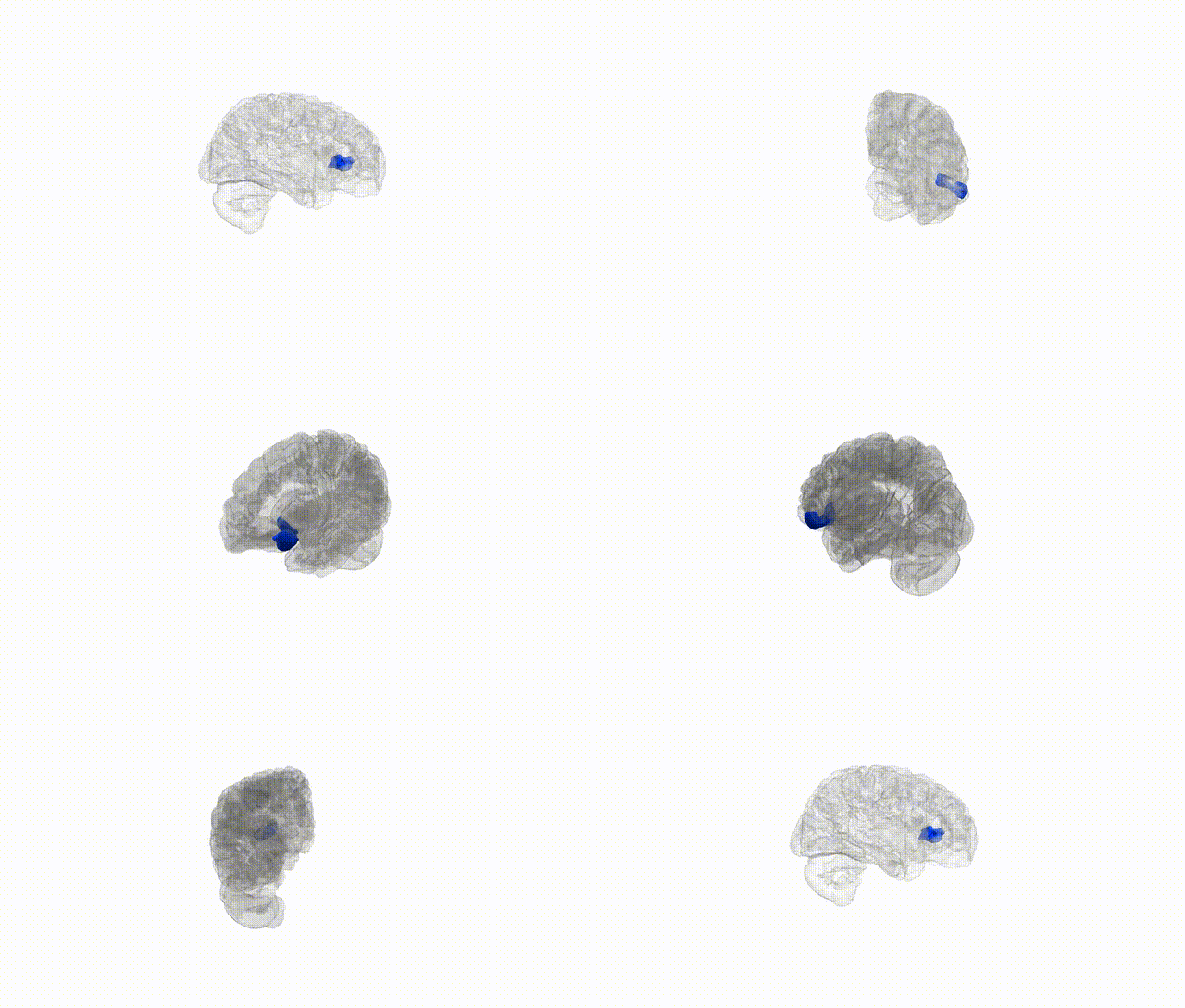
Full Quality Version: Download MP4
Wali Sidiqyar*, Gaurav Rudravaram*, Elyssa M. McMaster, Trent M. Schwartz, Adam M. Saunders, Kurt G. Schilling, Bennett A. Landman "Introducing SPINS: A Shared Public Visualization Library of Neuroanatomical Structures." Medical Imaging with Deep Learning- short paper
This resource is licensed under CC0 1.0 Universal (Public Domain).