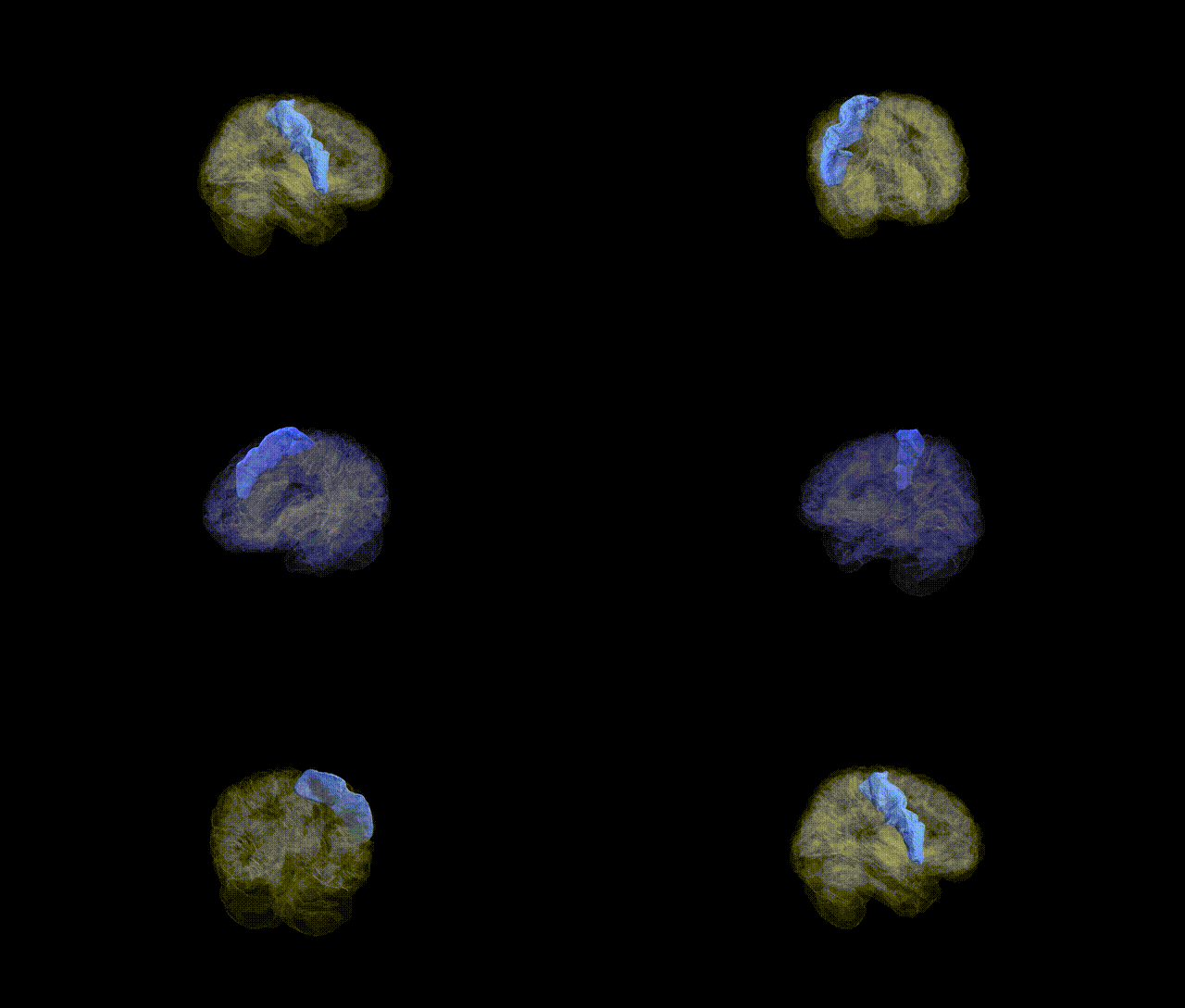
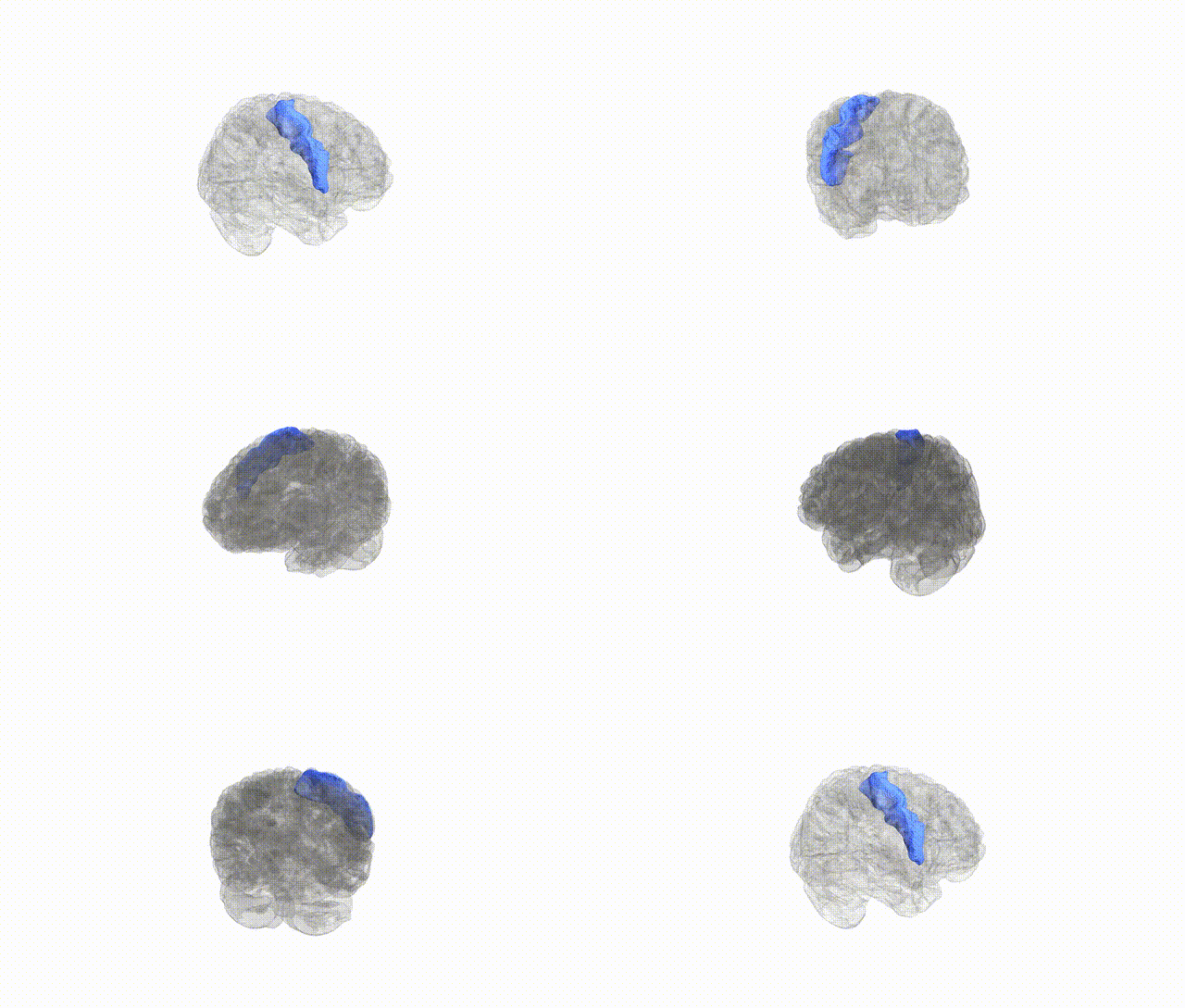
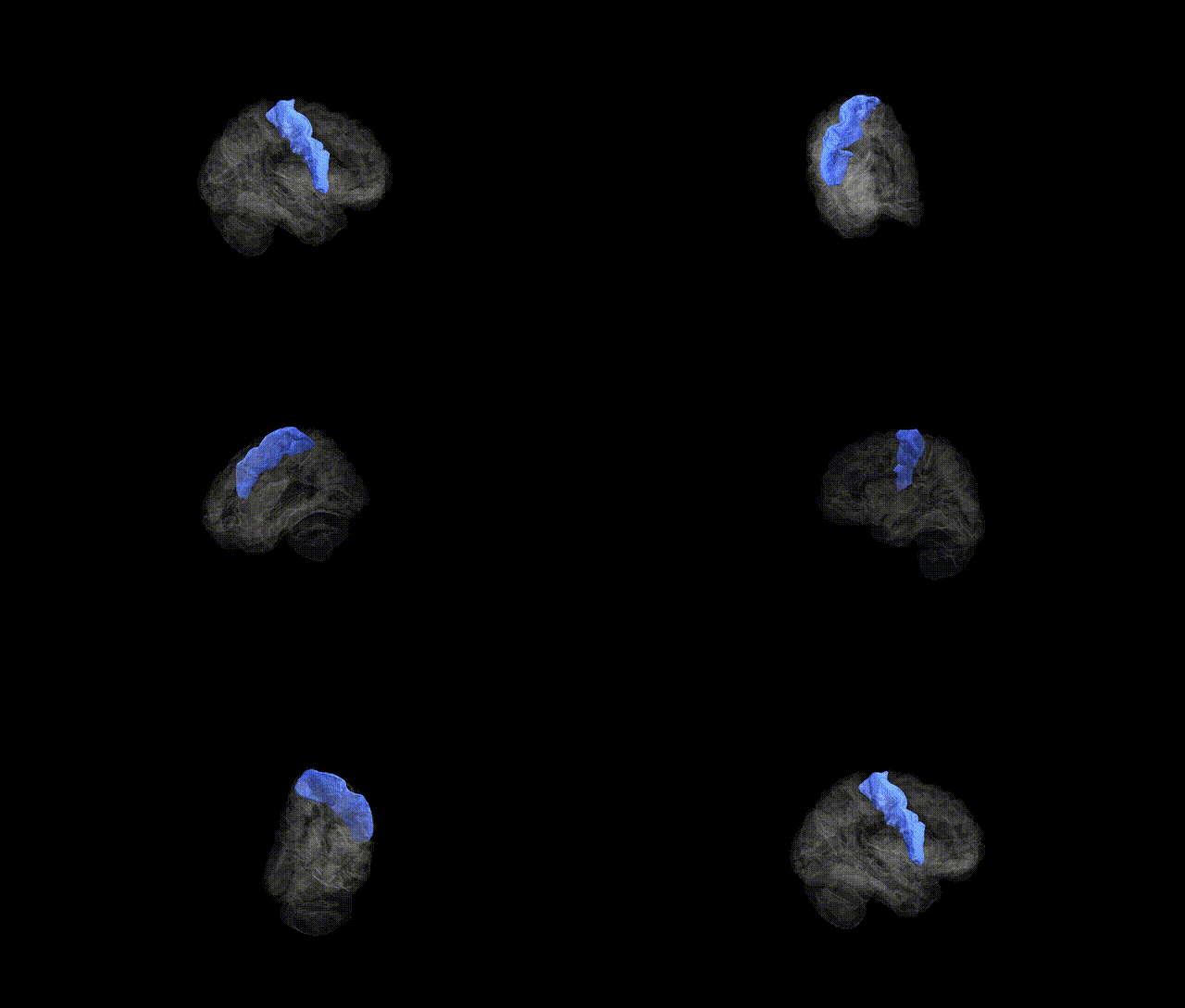
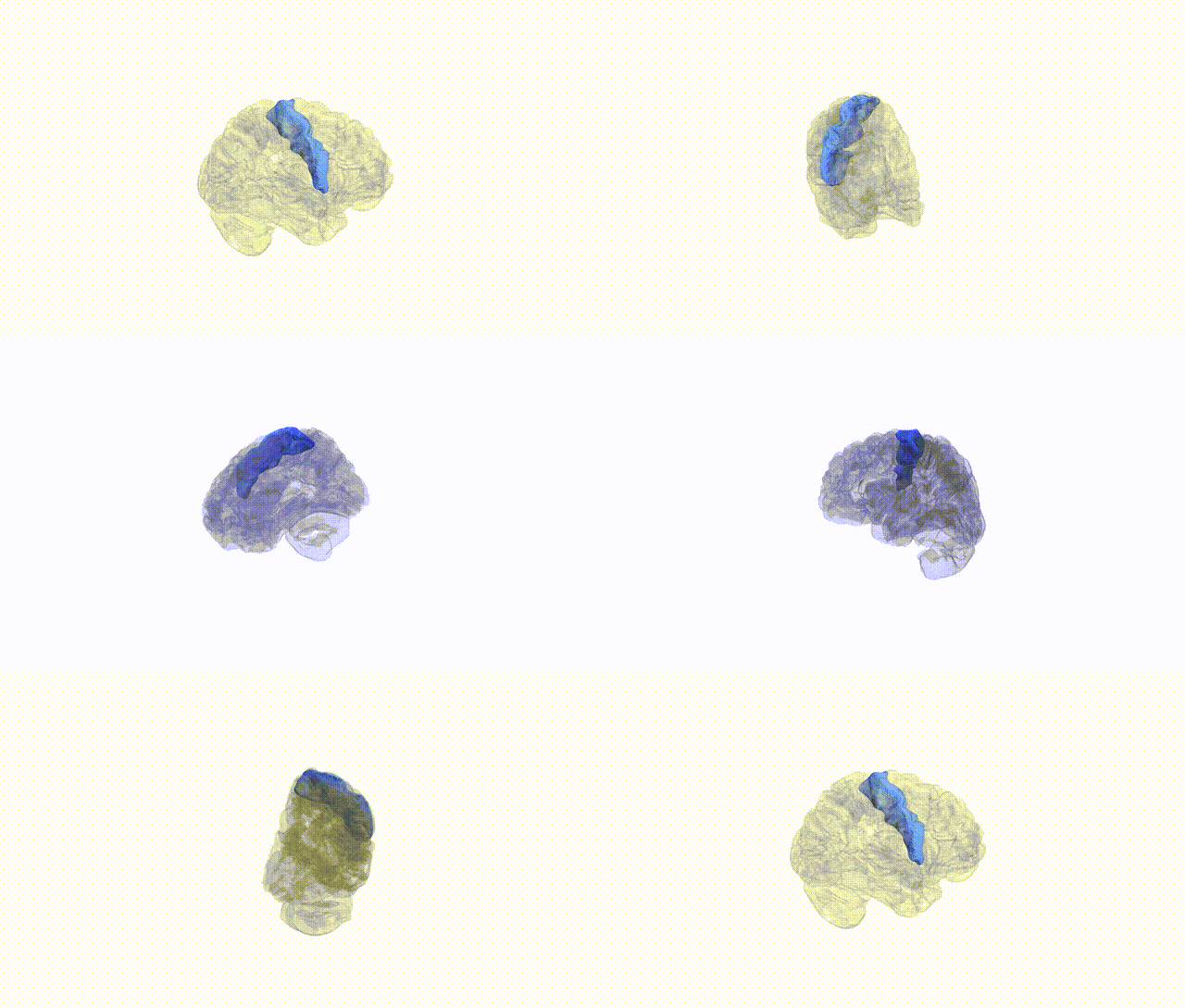
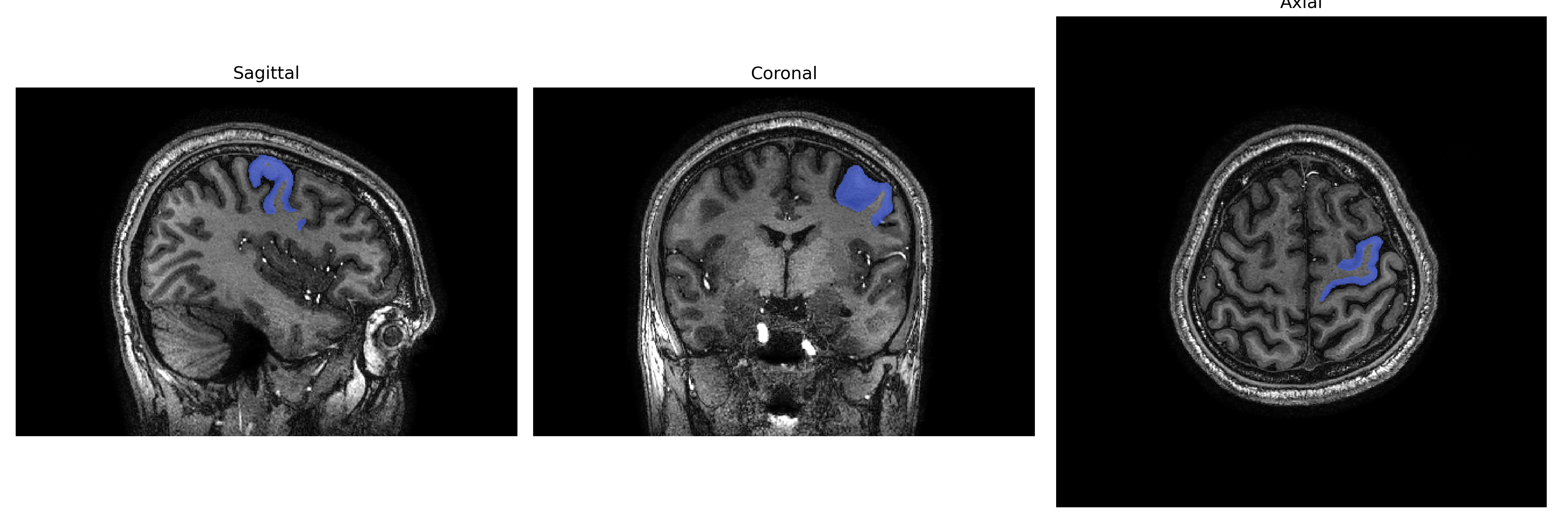
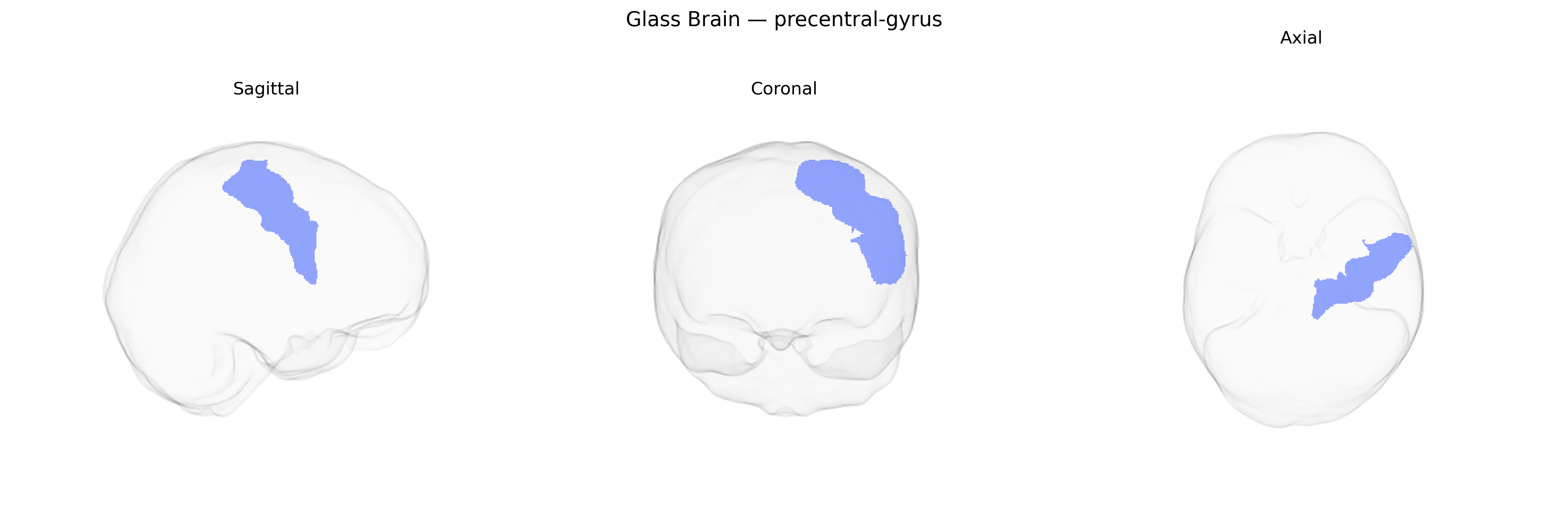
The Left precentral gyrus, corresponding largely to the primary motor cortex (M1, Brodmann area 4) in the left cerebral hemisphere, is a somatotopically organized cortical region responsible for the initiation and control of voluntary movements, particularly of the contralateral (right) side of the body. Neurons within this gyrus give rise to a major portion of the corticospinal and corticobulbar tracts, projecting to spinal and brainstem motor nuclei to modulate fine, fractionated movements, especially of the distal limbs and orofacial musculature. The region’s internal organization is described by the motor homunculus, with lower limb representation medially and face/hand representation laterally. Functionally, it participates in movement execution, motor learning, and modulation of muscle force, and is tightly interconnected with premotor, supplementary motor, somatosensory, basal ganglia, and cerebellar circuits. The Left precentral gyrus also exhibits hemispheric specialization, often contributing critically to motor aspects of speech and skilled manual actions in individuals with left-hemisphere dominance. Precentral gyrus
The left precentral gyrus, which encompasses primary motor cortex and adjacent motor planning areas in the brainCOLOR atlas, has been implicated in several genetic and GWAS-based associations involving both regional structure and motor-related function. Twin and SNP-based heritability studies show that cortical thickness and surface area in this region are substantially heritable, with large ENIGMA and UK Biobank analyses identifying multiple common variants—often in genes involved in neurodevelopment, axon guidance, and synaptic plasticity (for example, variants near HMGA2, PITPNM2, and genes in Wnt and growth-factor pathways) associated with its morphology. Polygenic risk scores for neurodevelopmental and psychiatric conditions, including schizophrenia, autism spectrum disorder, and attention-deficit/hyperactivity disorder, have been correlated with structural or functional alterations in the left precentral gyrus, suggesting partially shared genetic architectures. GWAS of motor and handedness traits have linked variants near LRRTM1 and other loci to asymmetries and functional characteristics of the precentral cortices, while variants associated with fine motor skills, reaction time, and general cognitive performance show imaging-genetic associations with this region’s volume and activation. In addition, ALS and other motor-neuron-related genetic risk loci (for example, C9orf72 expansions and SOD1 mutations) are frequently studied in relation to degeneration and connectivity changes of the precentral gyrus, reinforcing its role as a genetically influenced hub for motor control and its involvement across a spectrum of neurologic and psychiatric phenotypes.
Overview generated by GPT-4o (2026).
Region ID: 99
Hemisphere: Left
Atlas: brainCOLOR
Full Quality Version: Download MP4
Full Quality Version: Download MP4
Full Quality Version: Download MP4
Full Quality Version: Download MP4
Wali Sidiqyar*, Gaurav Rudravaram*, Elyssa M. McMaster, Trent M. Schwartz, Adam M. Saunders, Kurt G. Schilling, Bennett A. Landman "Introducing SPINS: A Shared Public Visualization Library of Neuroanatomical Structures." Medical Imaging with Deep Learning- short paper
This resource is licensed under CC0 1.0 Universal (Public Domain).