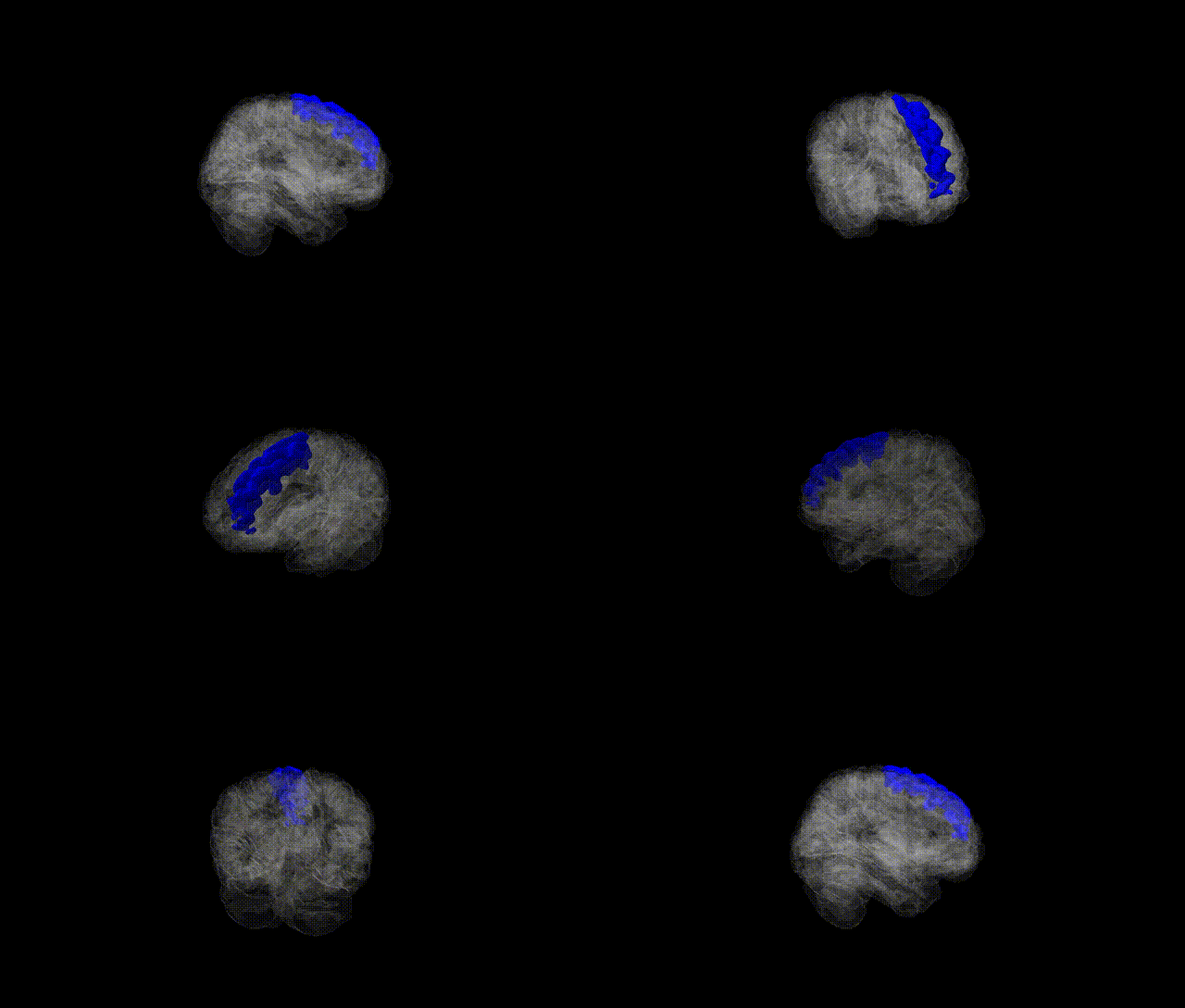
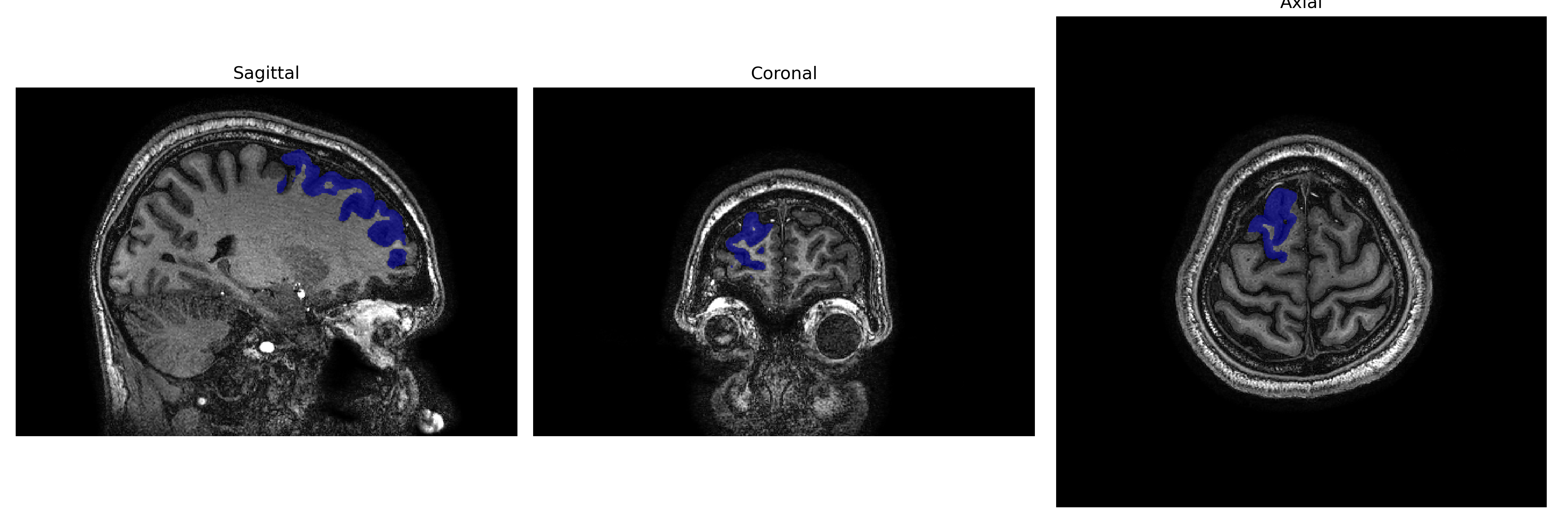
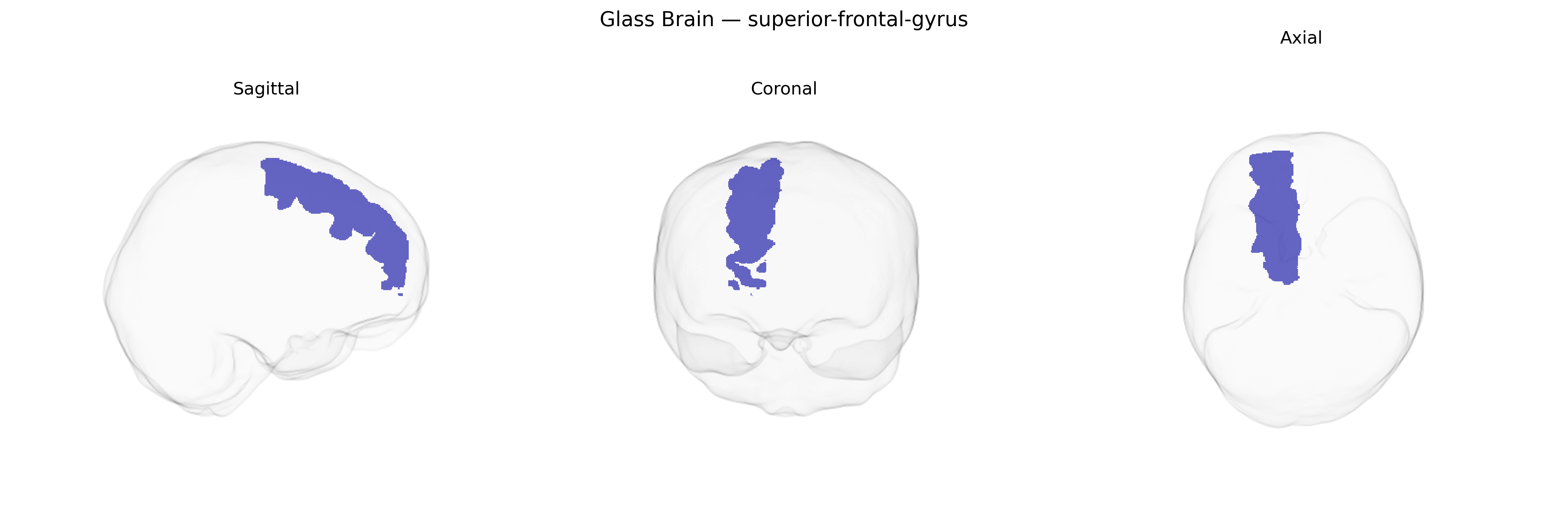
The Right superior-frontal-gyrus is a dorsally located region of the frontal lobe that extends along the superior frontal surface anterior to the precentral gyrus and contributes to higher-order executive, cognitive, and motor control functions. This gyrus participates in working memory, attentional control, decision making, and aspects of self-referential processing, and it is often functionally subdivided into more anterior (prefrontal) and posterior (premotor) portions. Connectivity of the right superior frontal gyrus includes widespread reciprocal projections to other prefrontal areas, premotor and supplementary motor regions, parietal association cortices, and subcortical structures such as the thalamus and basal ganglia, supporting its role in integrating cognitive and motor planning processes. In the brainCOLOR Atlas, this region is delineated as a distinct cortical label on the right hemisphere’s dorsal frontal surface. There is no direct link for this specific laterality-restricted label; a related article is Superior frontal gyrus.
The right superior frontal gyrus, as defined in parcellations such as the brainCOLOR Atlas, has been implicated in a range of genetic and GWAS findings primarily through imaging-genetics studies of cortical thickness, surface area, and functional activation rather than region-specific single-gene effects. Large-scale consortia (e.g., ENIGMA, UK Biobank) have identified polygenic influences on superior frontal cortical metrics, with common variants in or near genes such as HMGA2, KTN1, and MIR2113, among others, contributing to inter-individual variation in frontal lobe morphology that includes the superior frontal gyrus. Polygenic scores for general cognitive ability, educational attainment, and executive function show significant associations with structural and functional properties of the superior frontal cortex, aligning with this region’s role in working memory, attention, and cognitive control. GWAS of psychiatric and neurodevelopmental disorders—including schizophrenia, bipolar disorder, major depressive disorder, ADHD, and autism spectrum disorder—have linked disorder-associated polygenic risk scores to altered volume, thickness, or activation in the superior frontal gyrus, suggesting that many risk variants exert part of their effect through frontal executive networks. Additionally, genetic risk for neurodegenerative disorders (such as Alzheimer’s disease) and traits like neuroticism and risk-taking behavior has been associated with right frontal structural and functional variation, although effects are typically small, distributed, and shared across multiple frontal regions rather than specific to the right superior frontal gyrus alone.
Overview generated by GPT-4o (2026).
Region ID: 104
Hemisphere: Right
Atlas: brainCOLOR
Full Quality Version: Download MP4
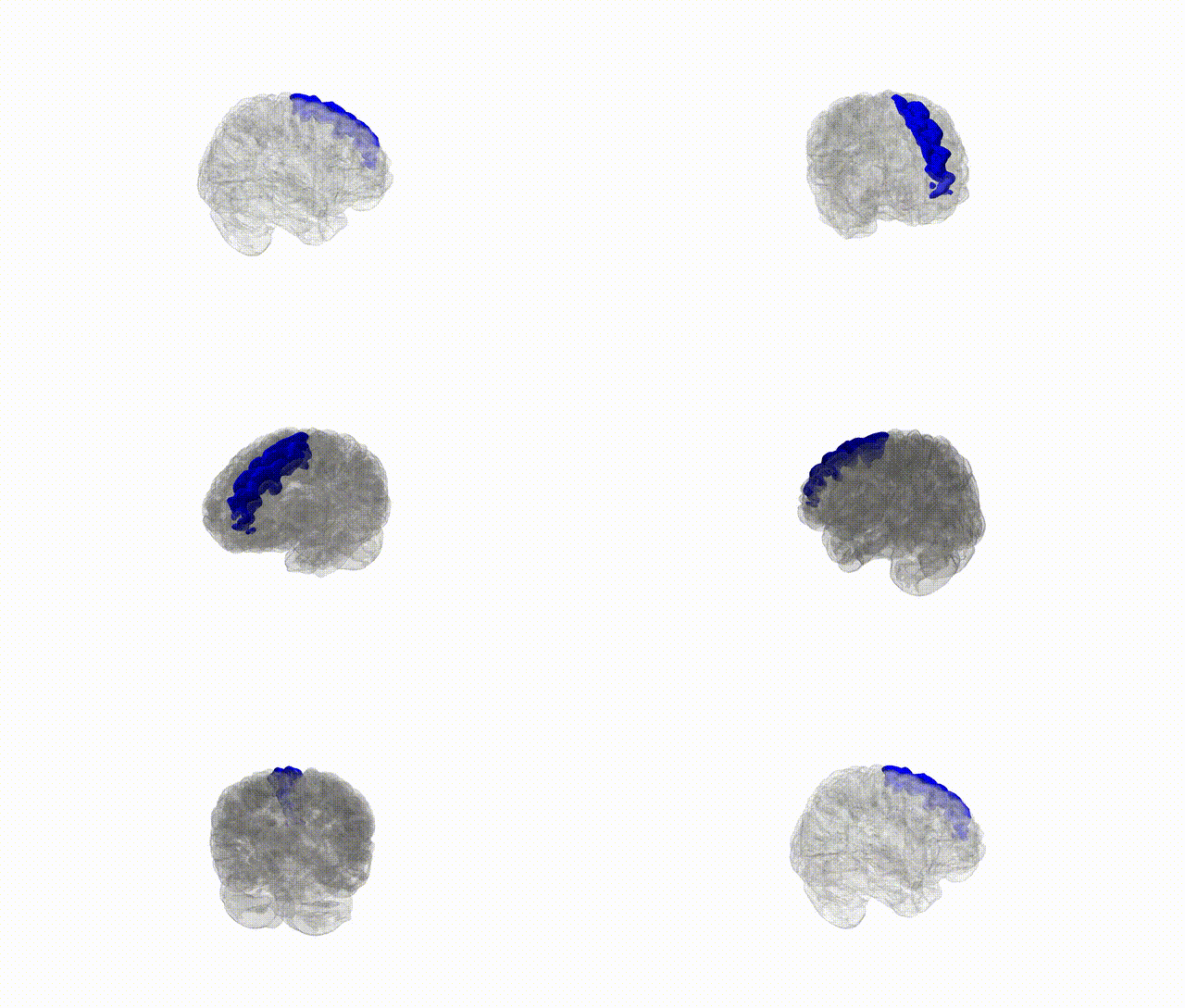
Full Quality Version: Download MP4
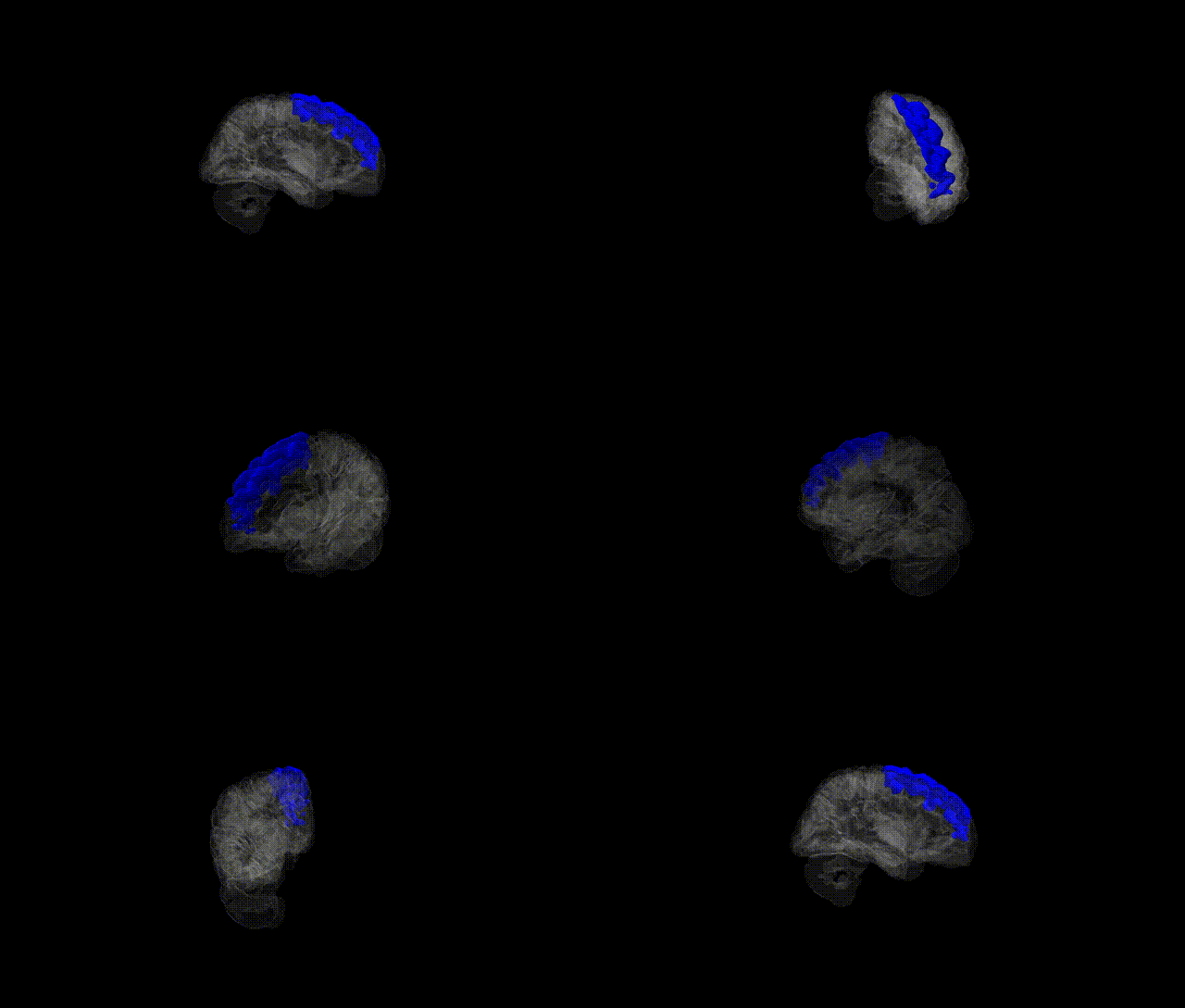
Full Quality Version: Download MP4
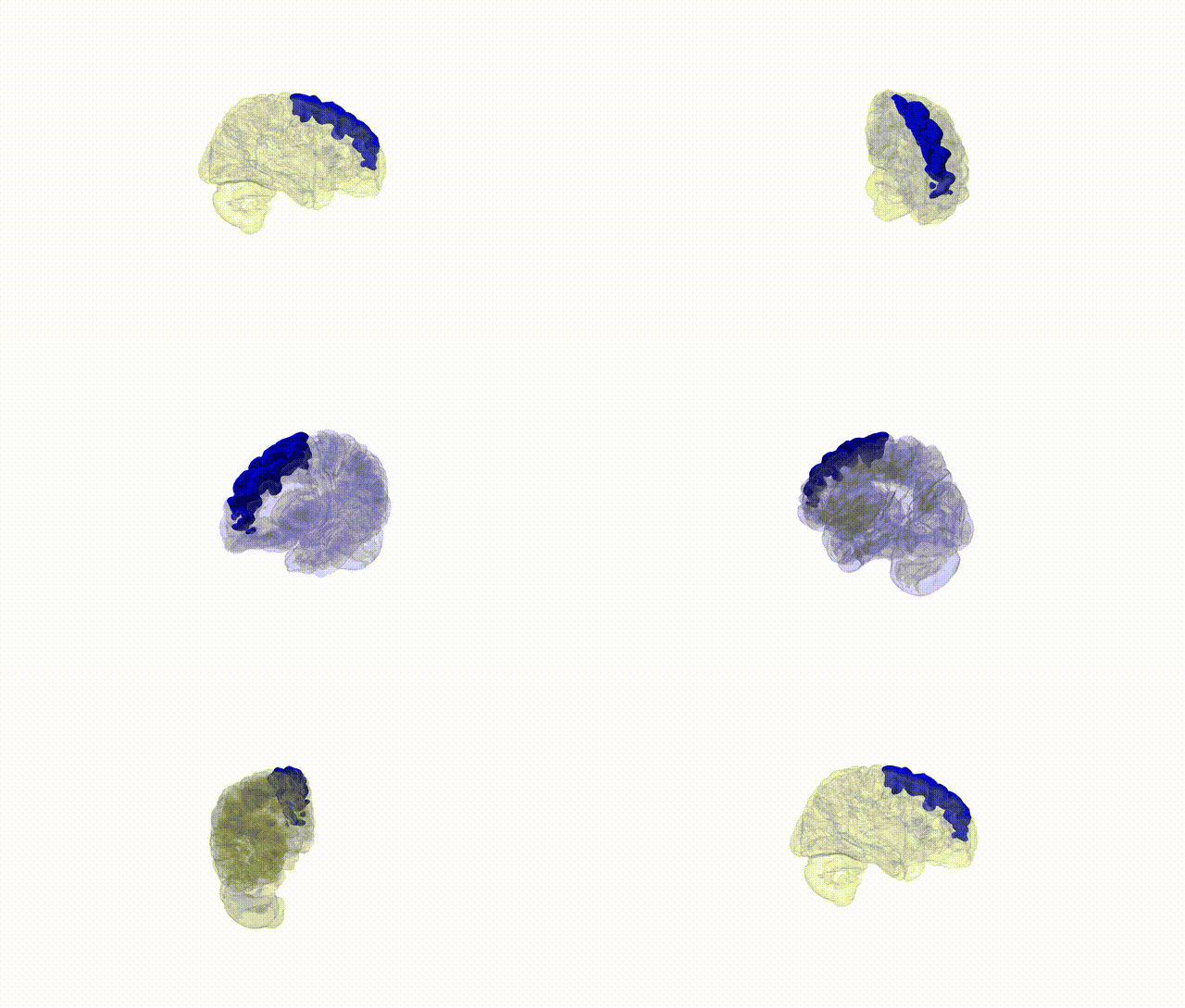
Full Quality Version: Download MP4
Wali Sidiqyar*, Gaurav Rudravaram*, Elyssa M. McMaster, Trent M. Schwartz, Adam M. Saunders, Kurt G. Schilling, Bennett A. Landman "Introducing SPINS: A Shared Public Visualization Library of Neuroanatomical Structures." Medical Imaging with Deep Learning- short paper
This resource is licensed under CC0 1.0 Universal (Public Domain).