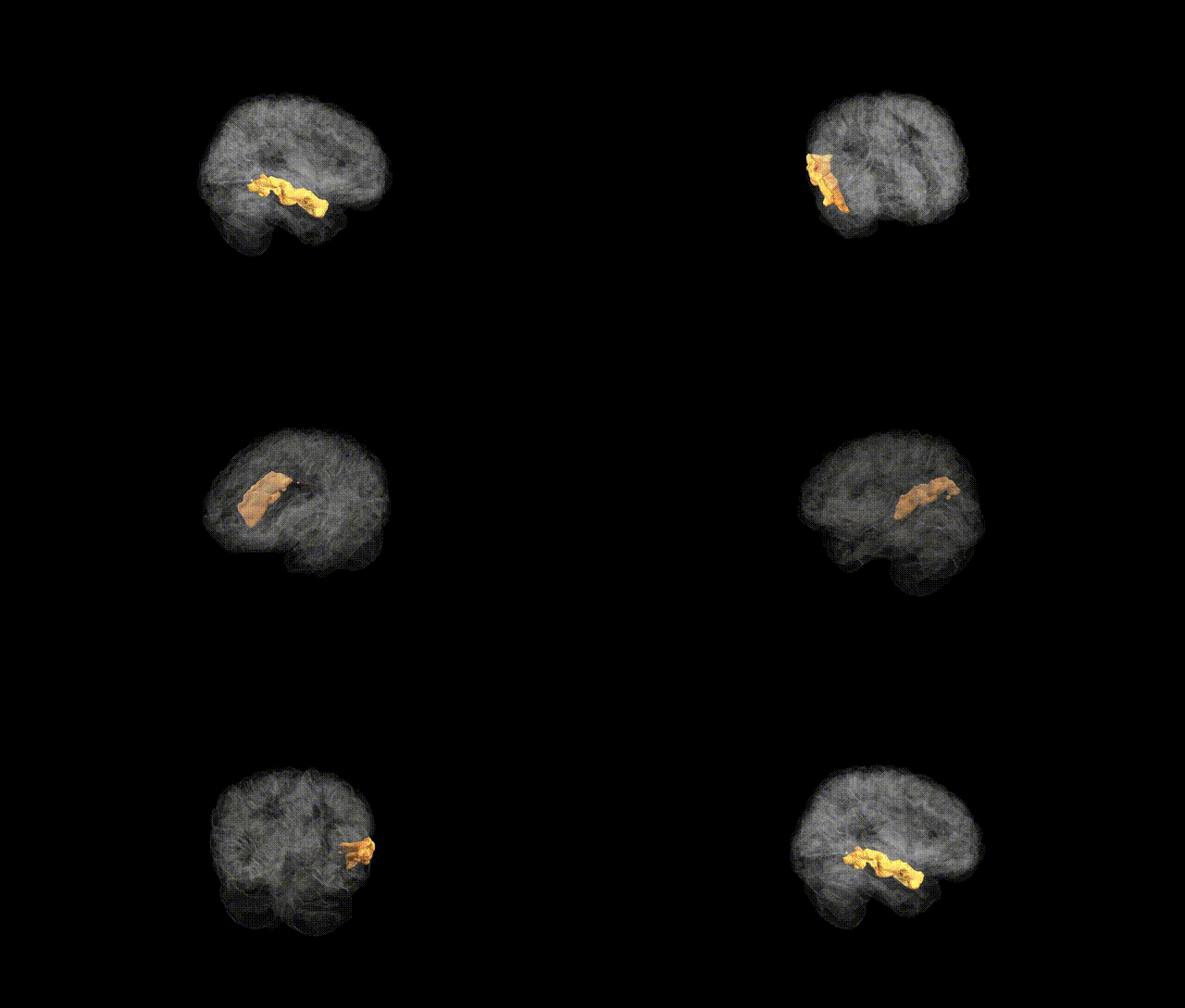
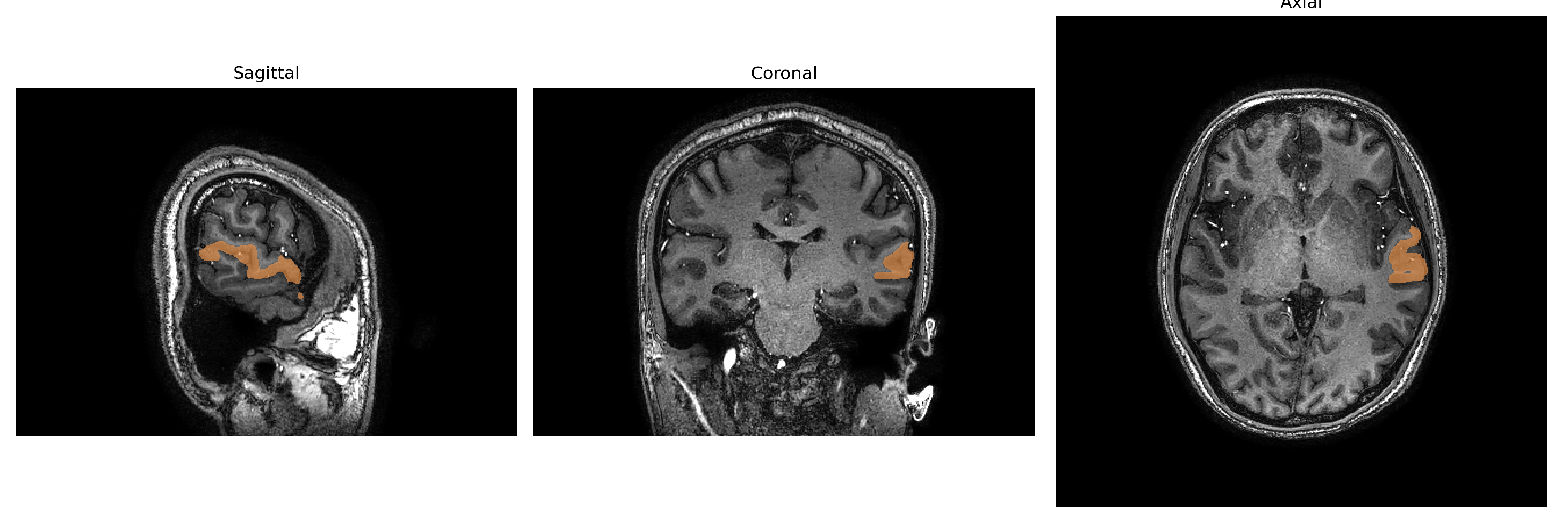
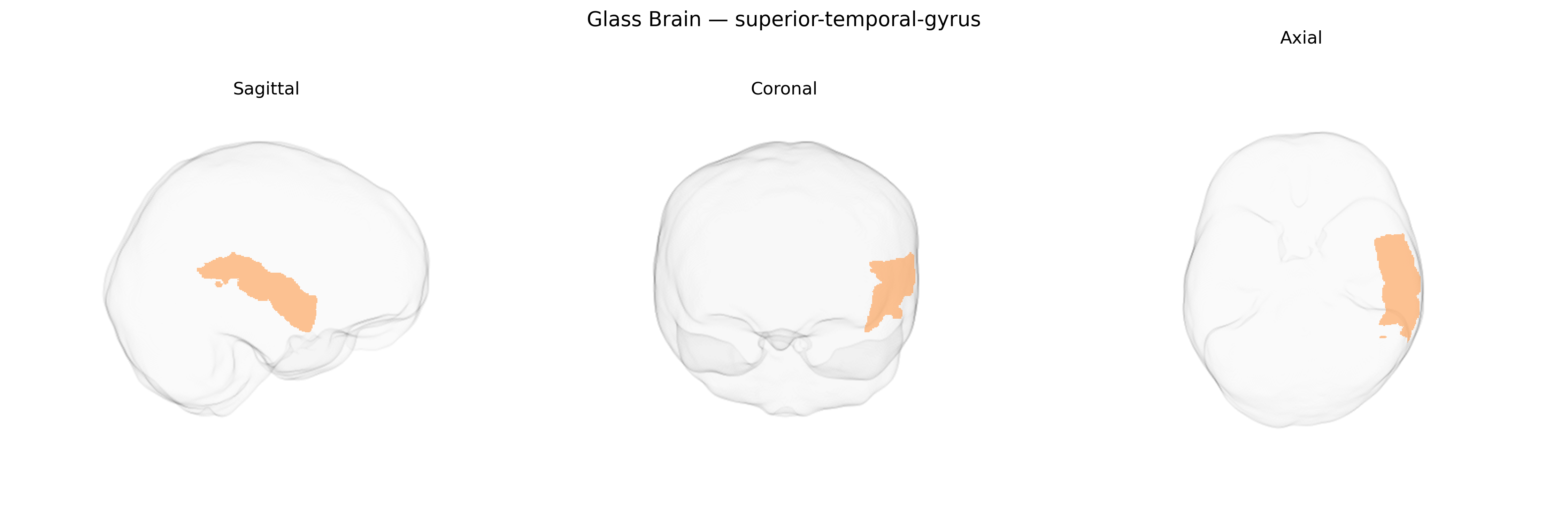
The left superior temporal gyrus is a cortical region of the temporal lobe located along the superior aspect of the temporal cortex, bordering the lateral sulcus. It contains primary and association auditory areas, including Heschl’s gyrus and Wernicke’s area (posterior portion), and plays a central role in auditory perception, phonological processing, and language comprehension, particularly for spoken language. Cytoarchitectonically, it encompasses parts of Brodmann areas 22, 41, and 42, and exhibits hemispheric specialization, with the left side more strongly associated with linguistic functions and semantic integration. Functionally, it is engaged during speech discrimination, processing of prosody and complex sounds, and integration of auditory input with higher-order cognitive processes and memory networks. There is no direct link for the left superior temporal gyrus as a standalone page; a related structure is the Superior temporal gyrus.
The left superior temporal gyrus (STG), as defined in parcellations such as the brainCOLOR Atlas, has been repeatedly implicated in genetic studies of language, auditory processing, and psychosis-related traits. Twin and SNP-based heritability analyses show moderate to high heritability of its cortical thickness and surface area, with genome-wide association studies (GWAS) identifying loci near genes involved in neurodevelopment and synaptic function (for example, variants near KIAA0319, CNTNAP2, FOXP2 pathways, and broader polygenic influences associated with cortical morphology). Structural and functional alterations in the left STG are genetically correlated with schizophrenia and bipolar disorder risk, and GWAS of psychotic experiences and schizophrenia have linked polygenic risk scores to reduced STG volume and altered asymmetry. Additional imaging-genetics work suggests associations between left STG morphology and common variants linked to autism spectrum disorder, language delay, dyslexia, and general cognitive ability, indicating that overlapping polygenic architectures for language, psychosis vulnerability, and neurodevelopmental disorders contribute to individual variation in this region’s structure and function.
Overview generated by GPT-4o (2026).
Region ID: 115
Hemisphere: Left
Atlas: brainCOLOR
Full Quality Version: Download MP4
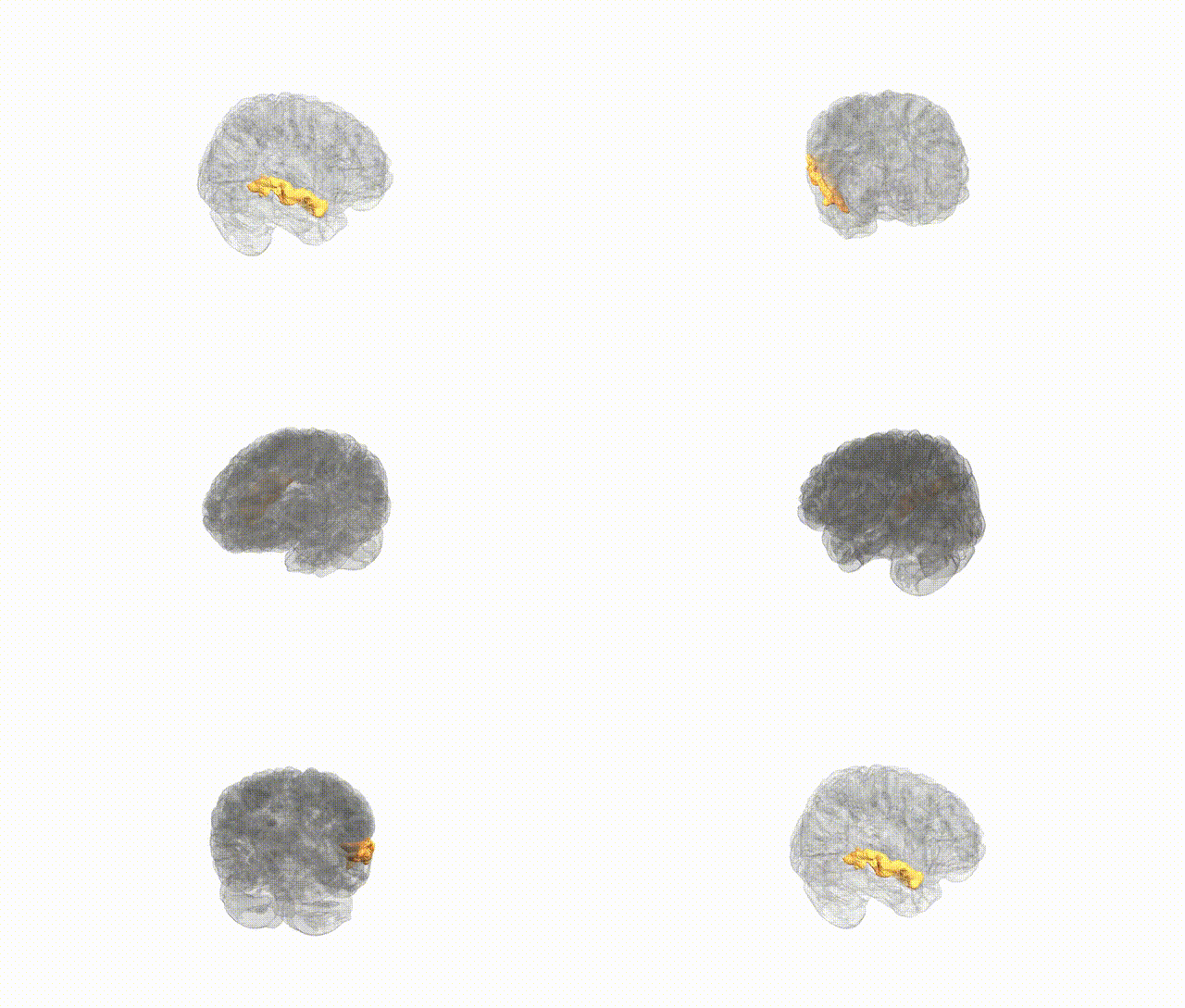
Full Quality Version: Download MP4
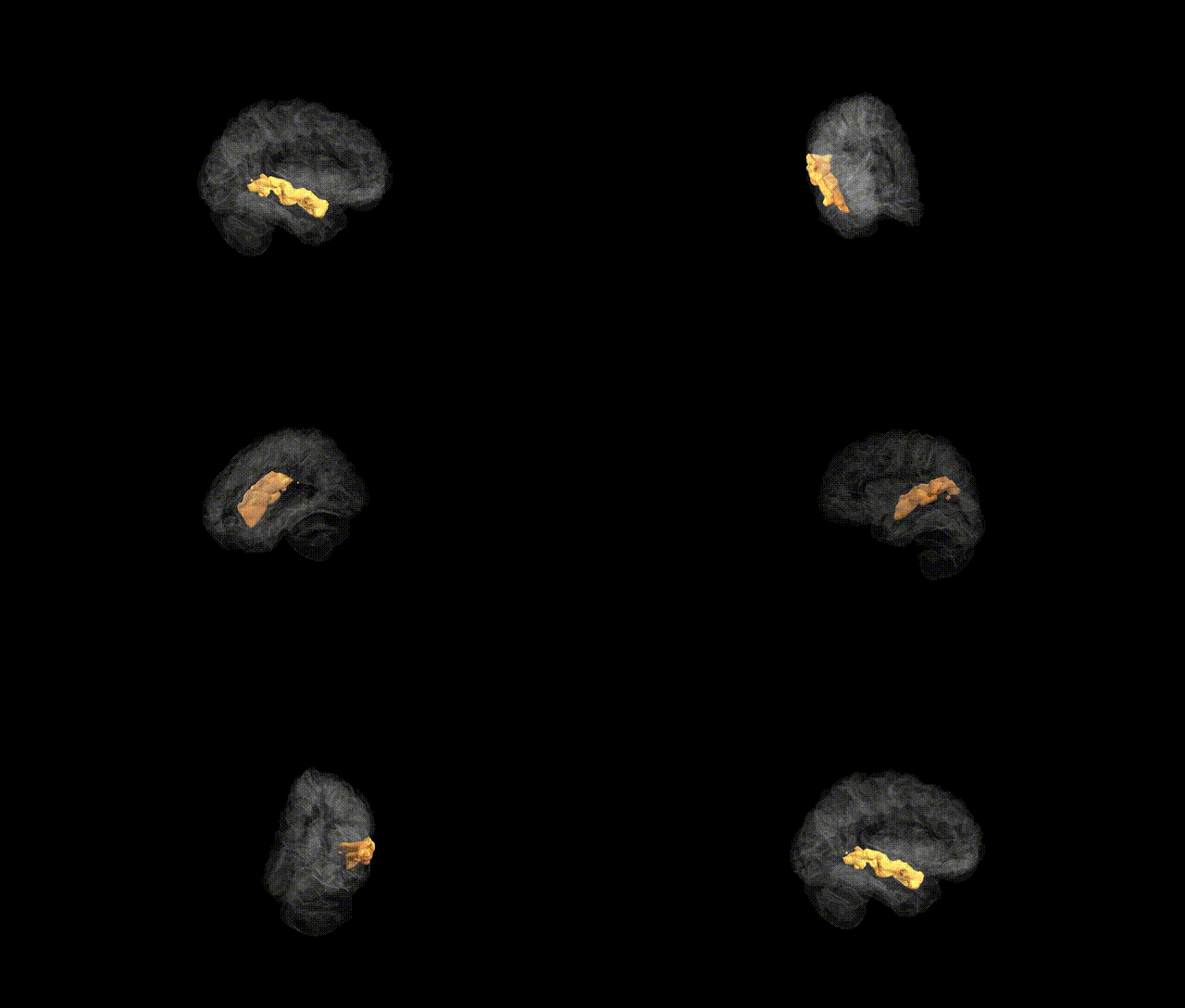
Full Quality Version: Download MP4
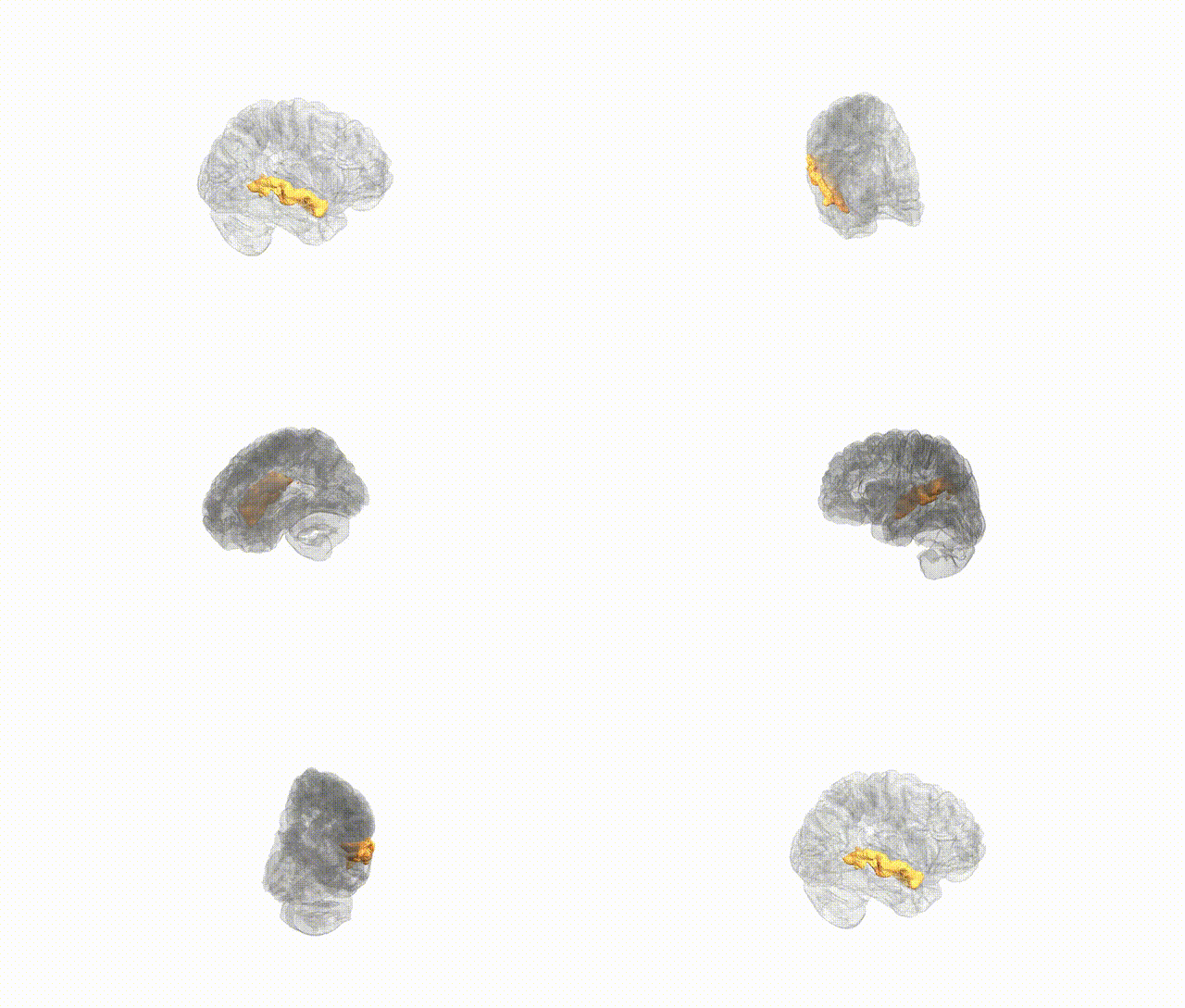
Full Quality Version: Download MP4
Wali Sidiqyar*, Gaurav Rudravaram*, Elyssa M. McMaster, Trent M. Schwartz, Adam M. Saunders, Kurt G. Schilling, Bennett A. Landman "Introducing SPINS: A Shared Public Visualization Library of Neuroanatomical Structures." Medical Imaging with Deep Learning- short paper
This resource is licensed under CC0 1.0 Universal (Public Domain).