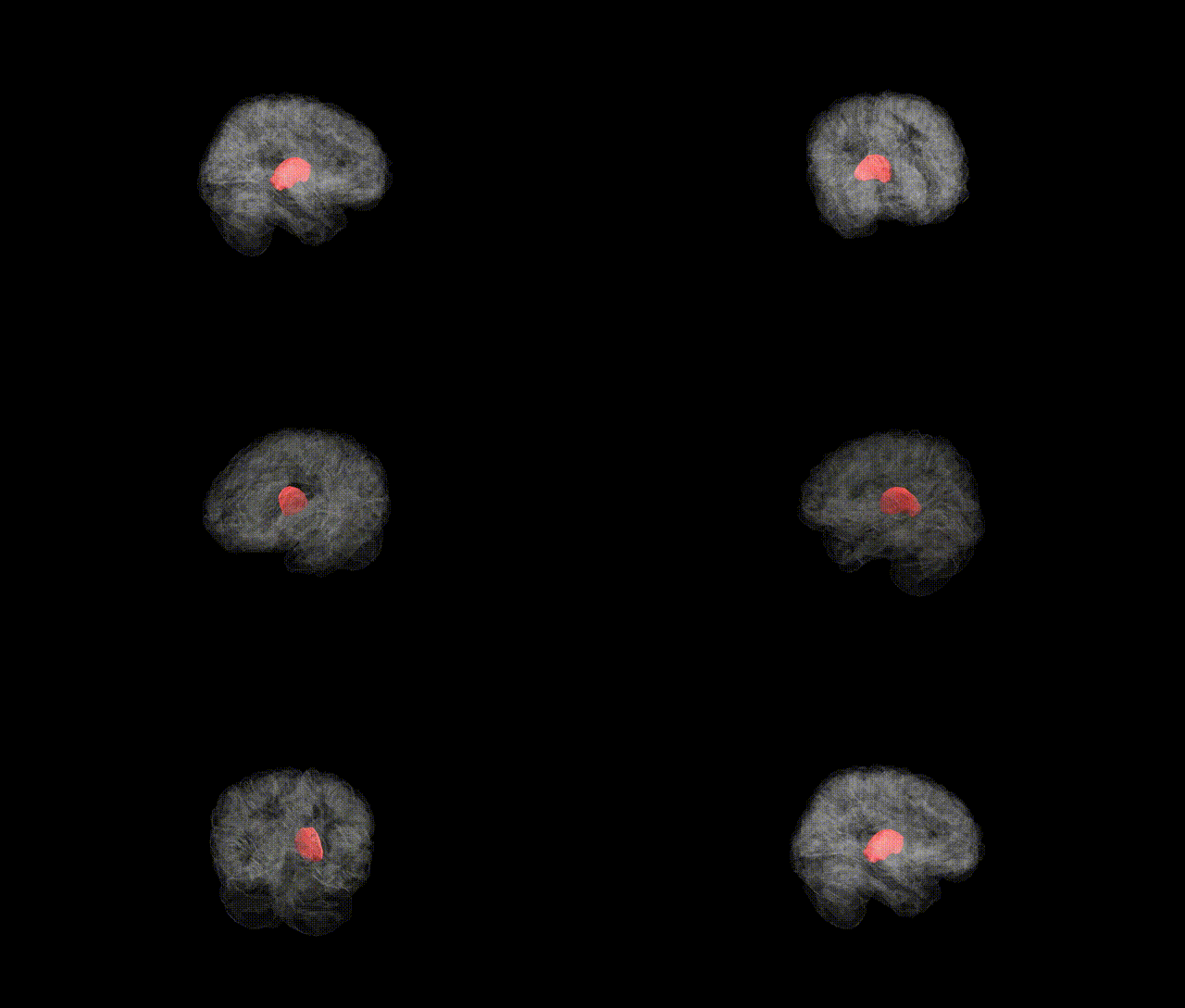
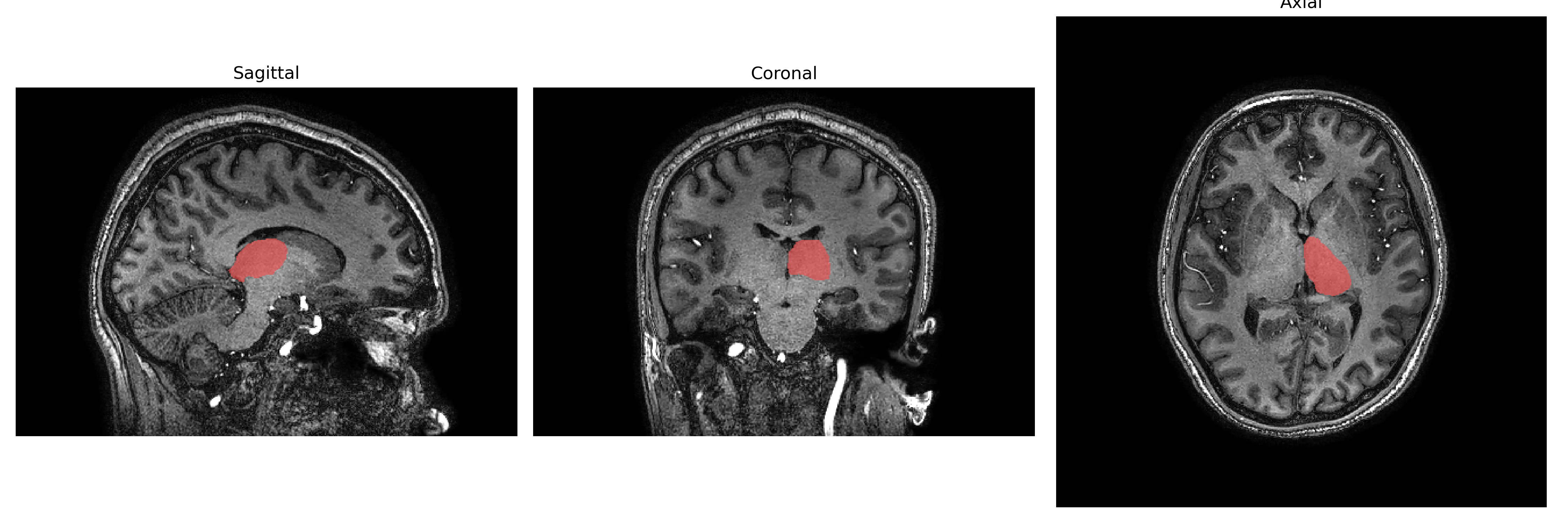
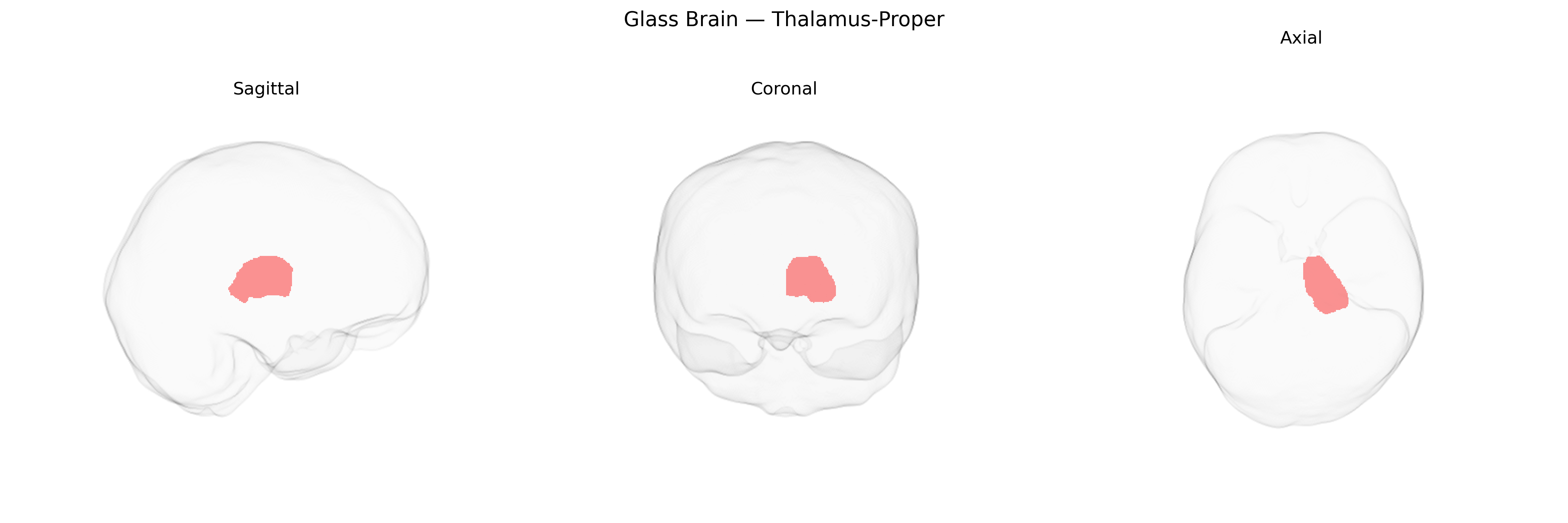
The Left Thalamus-Proper, as defined in the brainCOLOR Atlas, corresponds to the main mass of thalamic gray matter in the left hemisphere, excluding adjacent epithalamic and subthalamic structures. It is a key relay and integrative center composed of multiple nuclei that process and transmit sensory (excluding olfactory), motor, limbic, and associative information between subcortical regions and widespread cortical areas. Afferent inputs arise from structures such as the cerebellum, basal ganglia, brainstem, and spinal cord, while efferent projections are organized into specific thalamocortical pathways that modulate perception, arousal, attention, and higher-order cognition. The Left Thalamus-Proper also participates in large-scale functional networks, including cortico-striato-thalamo-cortical loops implicated in motor control and executive functions, and is commonly involved in pathologies such as thalamic stroke, movement disorders, and certain neuropsychiatric conditions. Thalamus
The Left Thalamus-Proper region, as defined in the brainCOLOR (FreeSurfer/aseg-compatible) atlas, has emerged in multiple GWAS and imaging-genetics studies as a heritable subcortical structure with numerous polygenic influences, but relatively few single loci of large effect. Large-scale consortia such as ENIGMA and UK Biobank have identified common variants near genes involved in neurodevelopment, synaptic signaling, and cell adhesion (for example, loci near NPTN, PTCH1, and variants in or near genes regulating neuronal proliferation and axon guidance) that associate with thalamic volume or shape, including the left thalamus. These genetic determinants often overlap with risk architectures for neuropsychiatric and neurodevelopmental disorders: schizophrenia, bipolar disorder, major depressive disorder, ADHD, and autism spectrum disorder have each shown polygenic correlations with thalamic volume or structural connectivity, with some disorder-associated loci showing parallel effects on thalamic size or microstructure. Additionally, variants associated with cognitive traits (general intelligence, processing speed, educational attainment), sleep and circadian behaviors, and certain neurological conditions (e.g., migraine, epilepsy) have been found to correlate with thalamic morphology or function, suggesting that the Left Thalamus-Proper acts as a key convergence point where pleiotropic genetic effects influence both brain structure and a range of behavioral and clinical phenotypes.
Overview generated by GPT-4o (2026).
Region ID: 16
Hemisphere: Left
Atlas: brainCOLOR
Full Quality Version: Download MP4
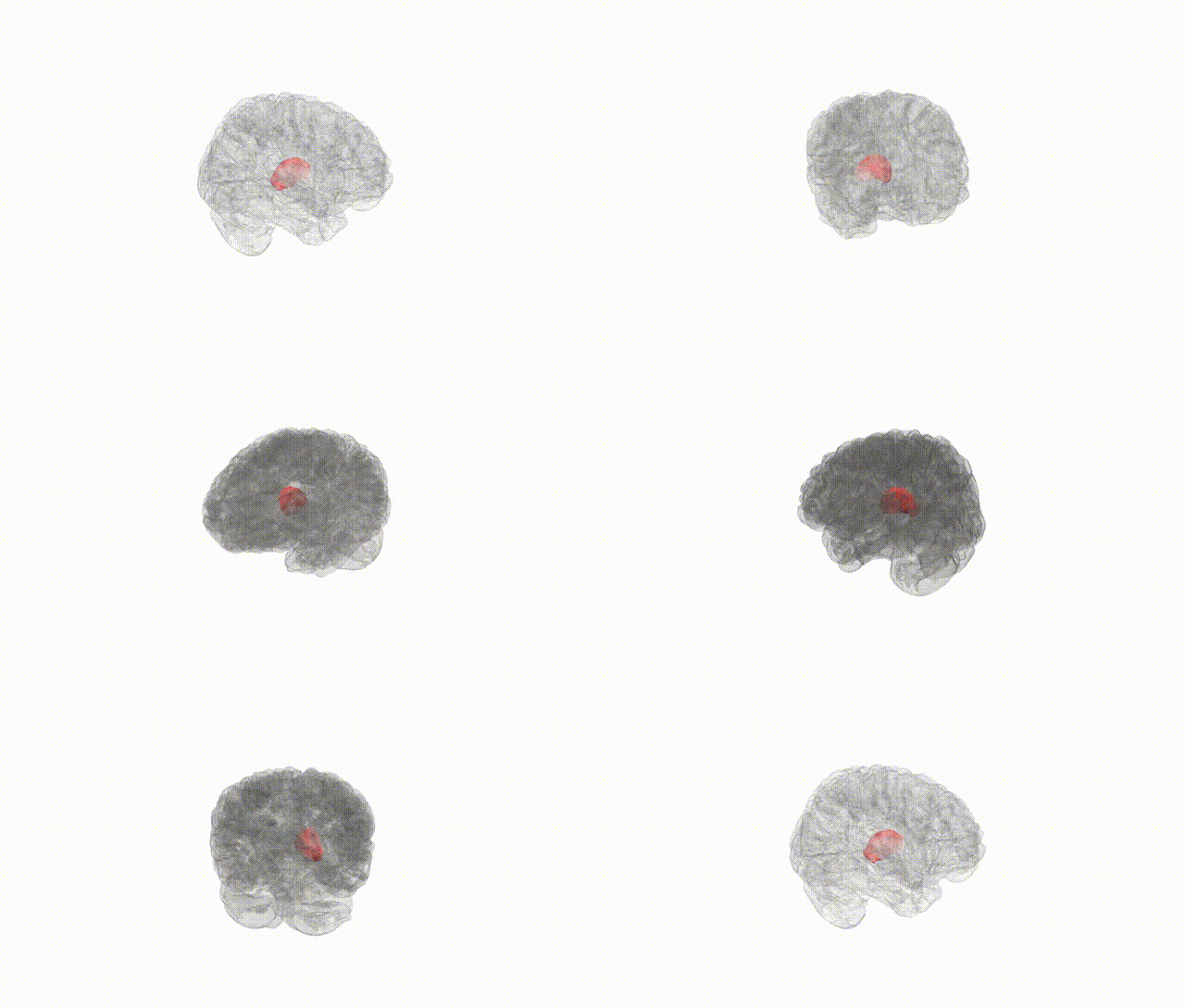
Full Quality Version: Download MP4
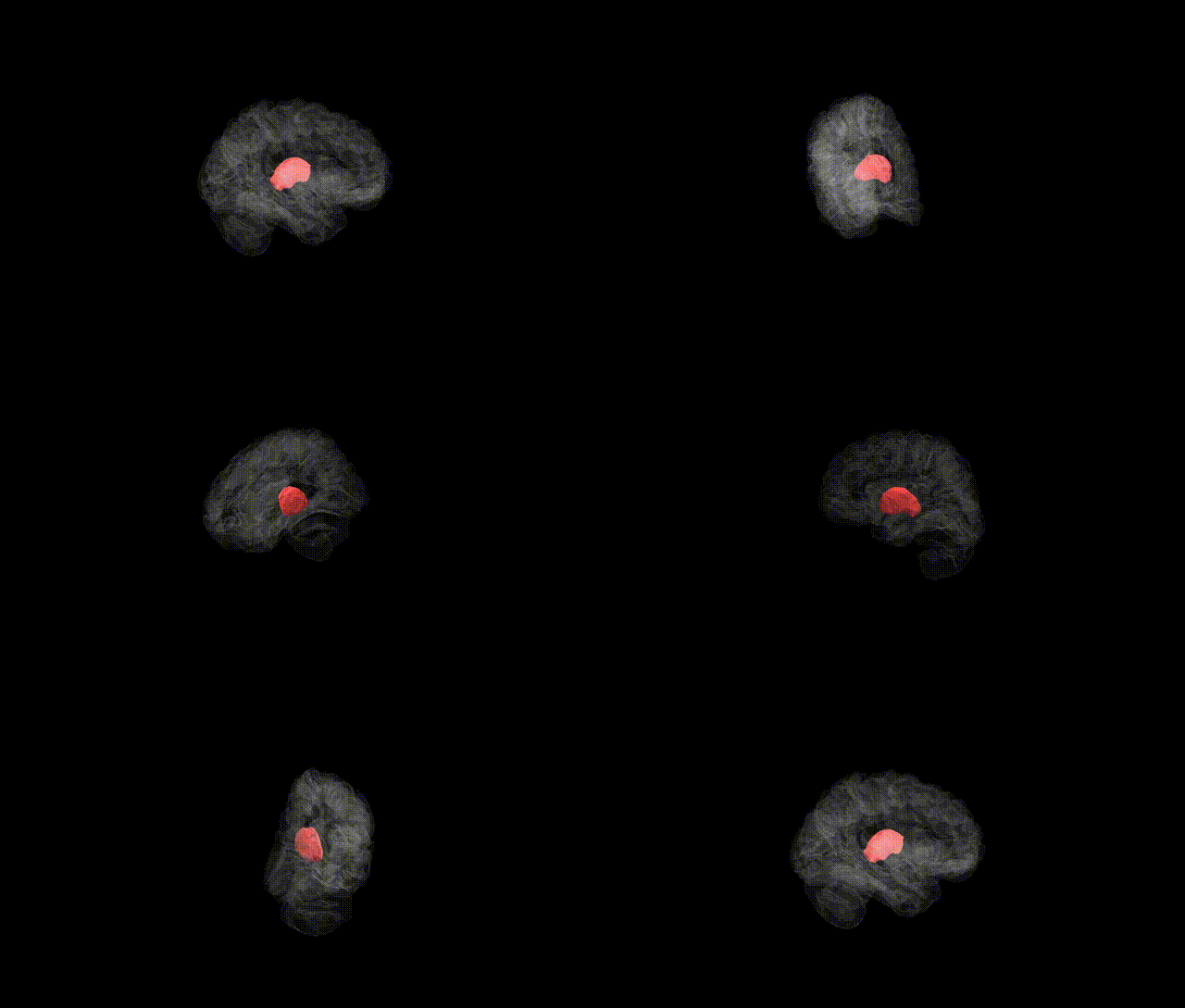
Full Quality Version: Download MP4
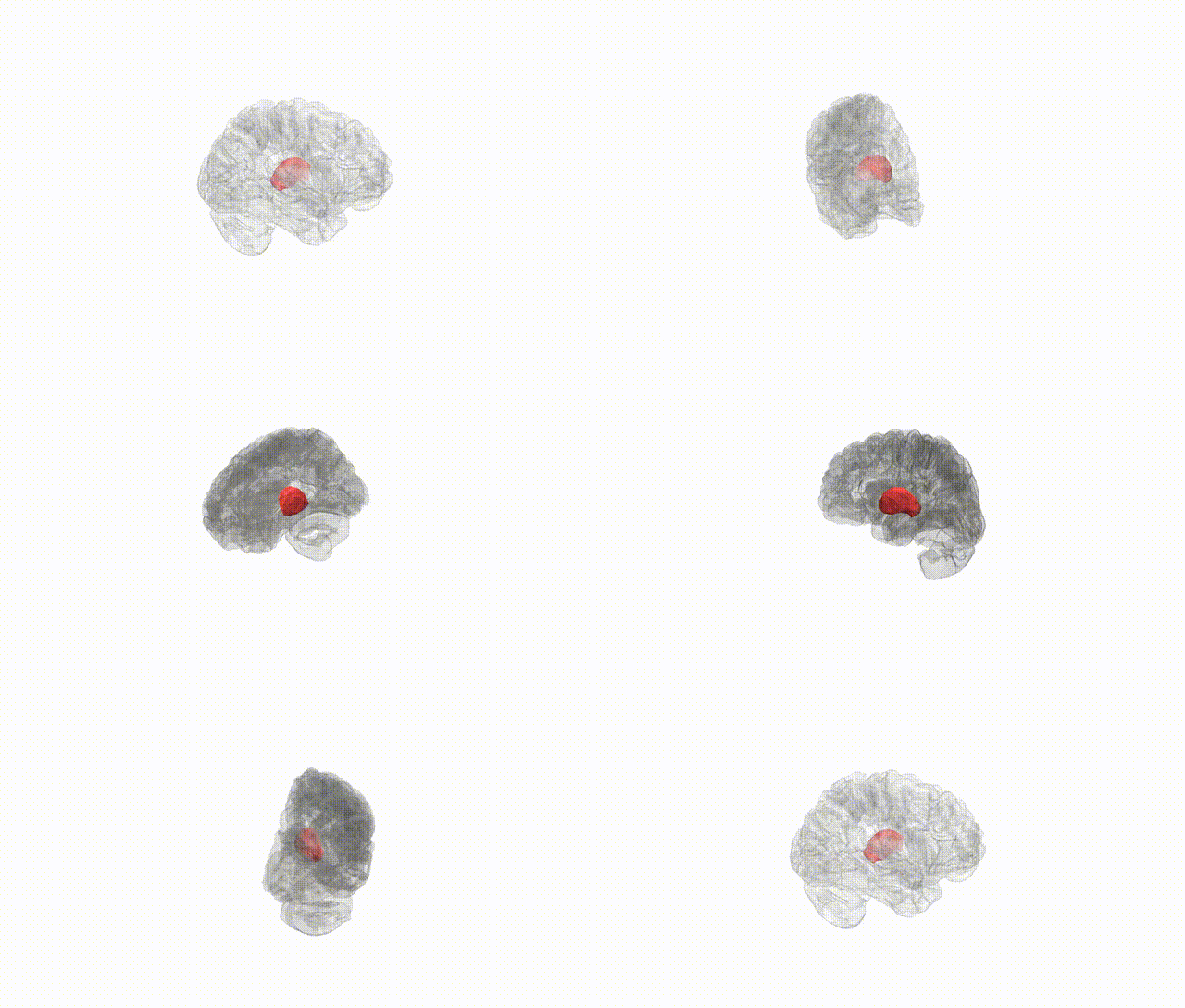
Full Quality Version: Download MP4
Wali Sidiqyar*, Gaurav Rudravaram*, Elyssa M. McMaster, Trent M. Schwartz, Adam M. Saunders, Kurt G. Schilling, Bennett A. Landman "Introducing SPINS: A Shared Public Visualization Library of Neuroanatomical Structures." Medical Imaging with Deep Learning- short paper
This resource is licensed under CC0 1.0 Universal (Public Domain).