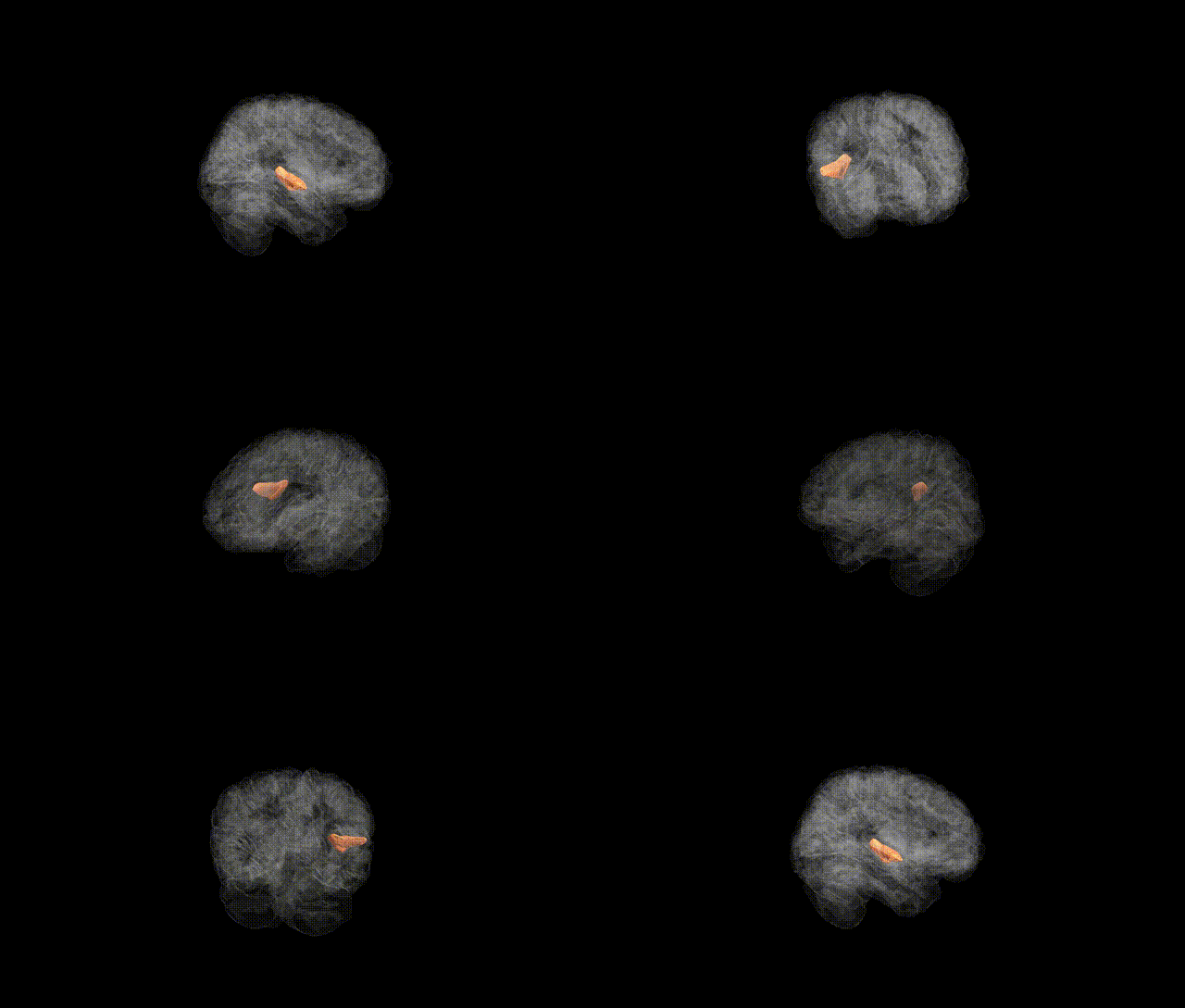
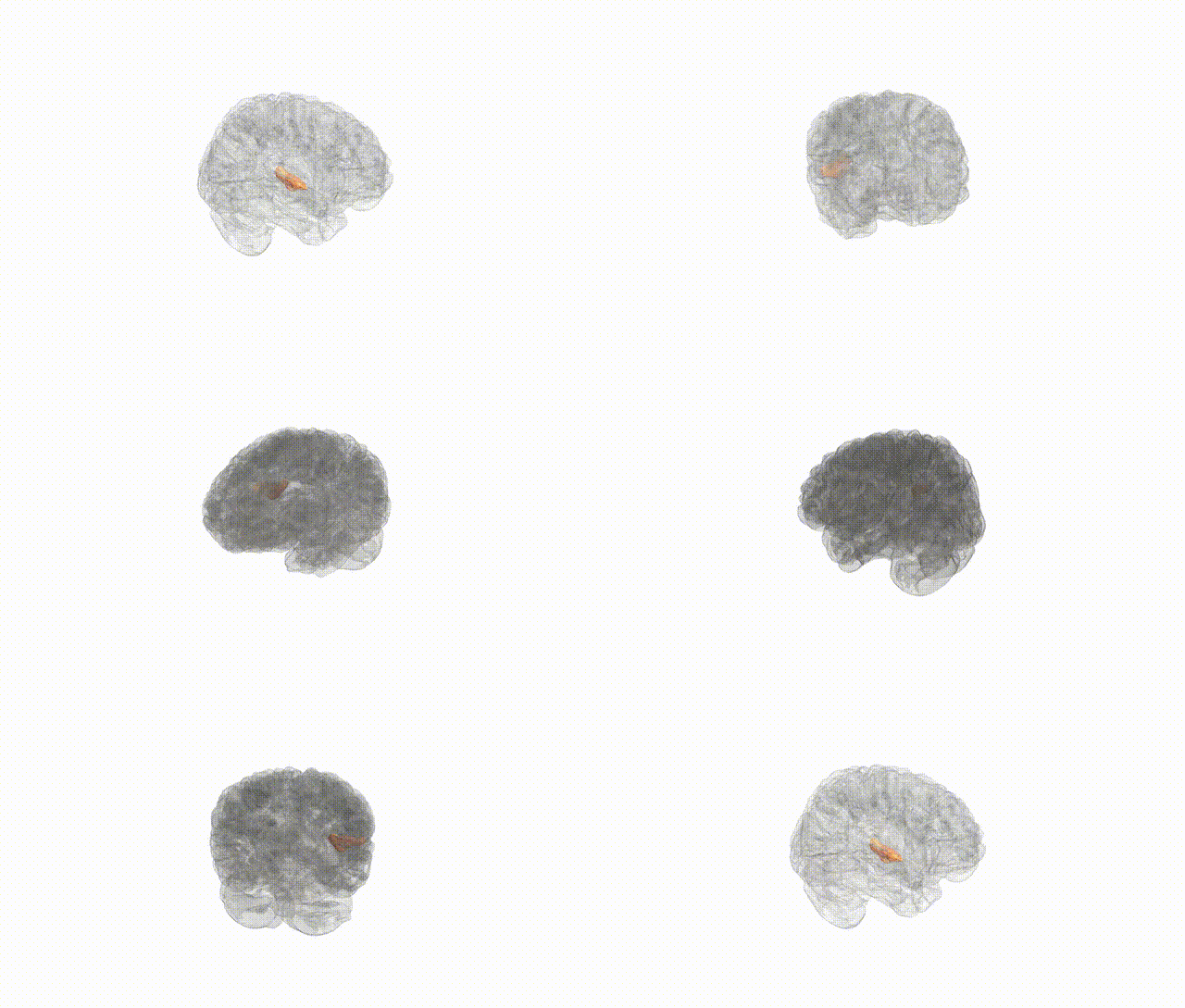
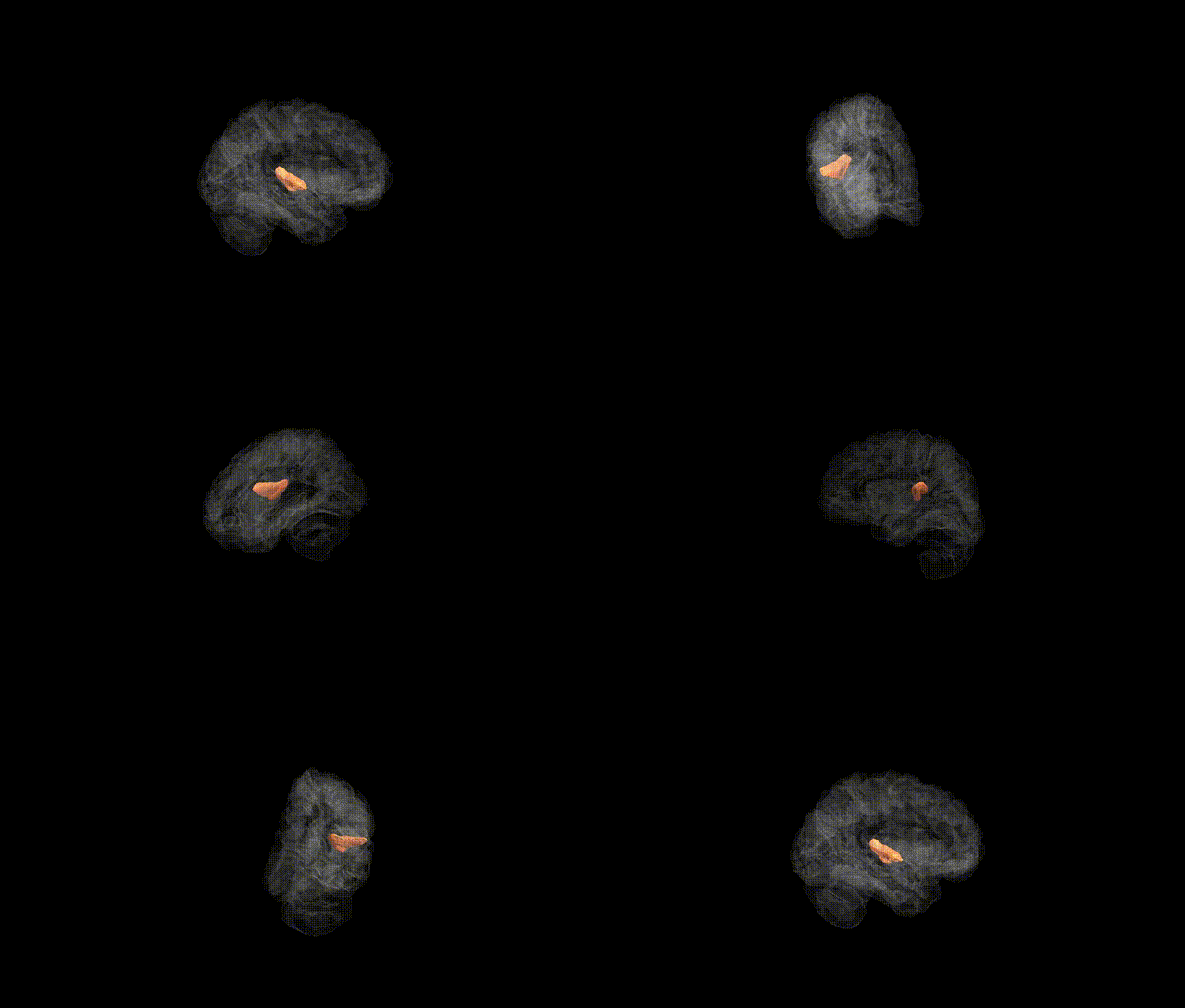
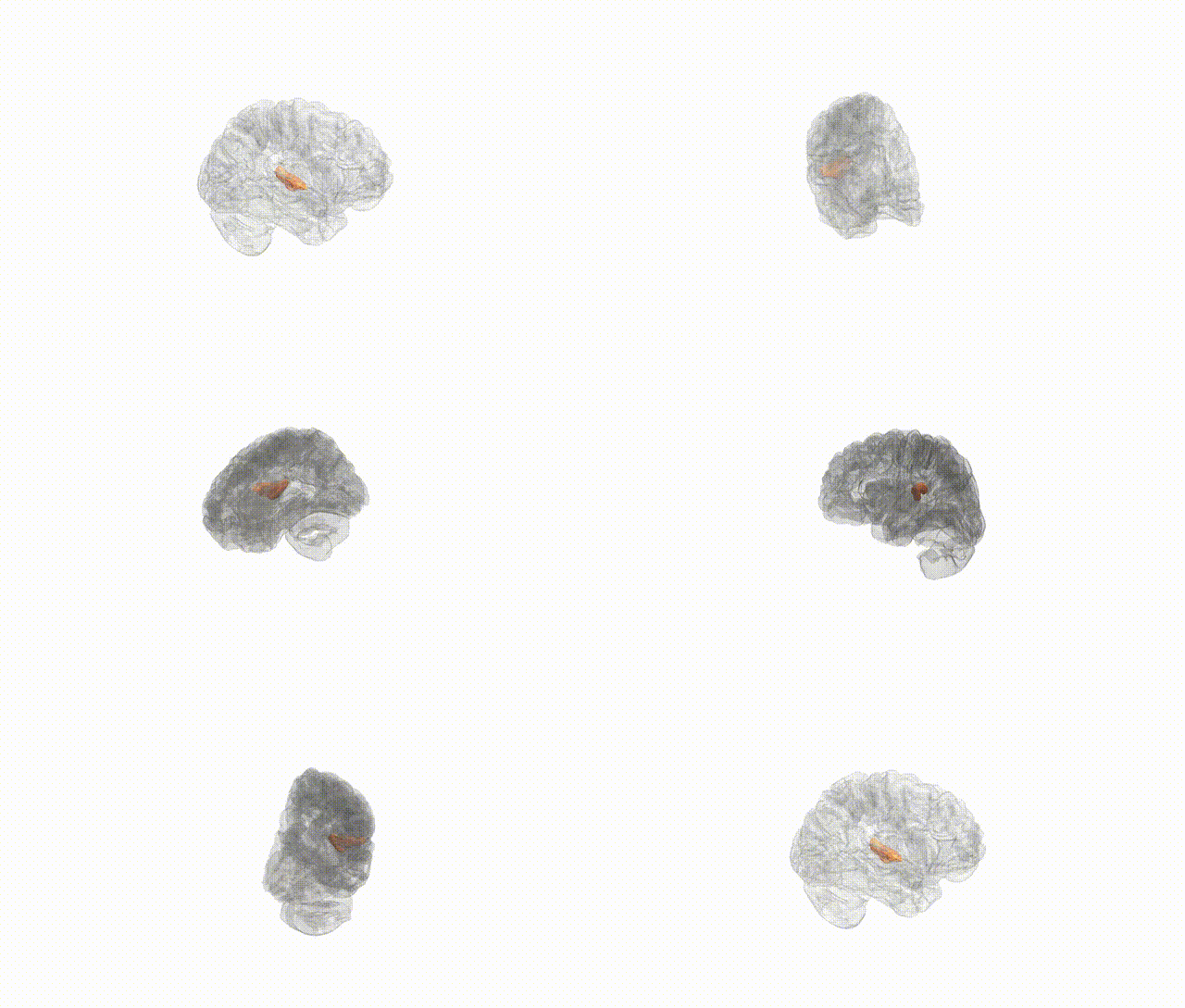
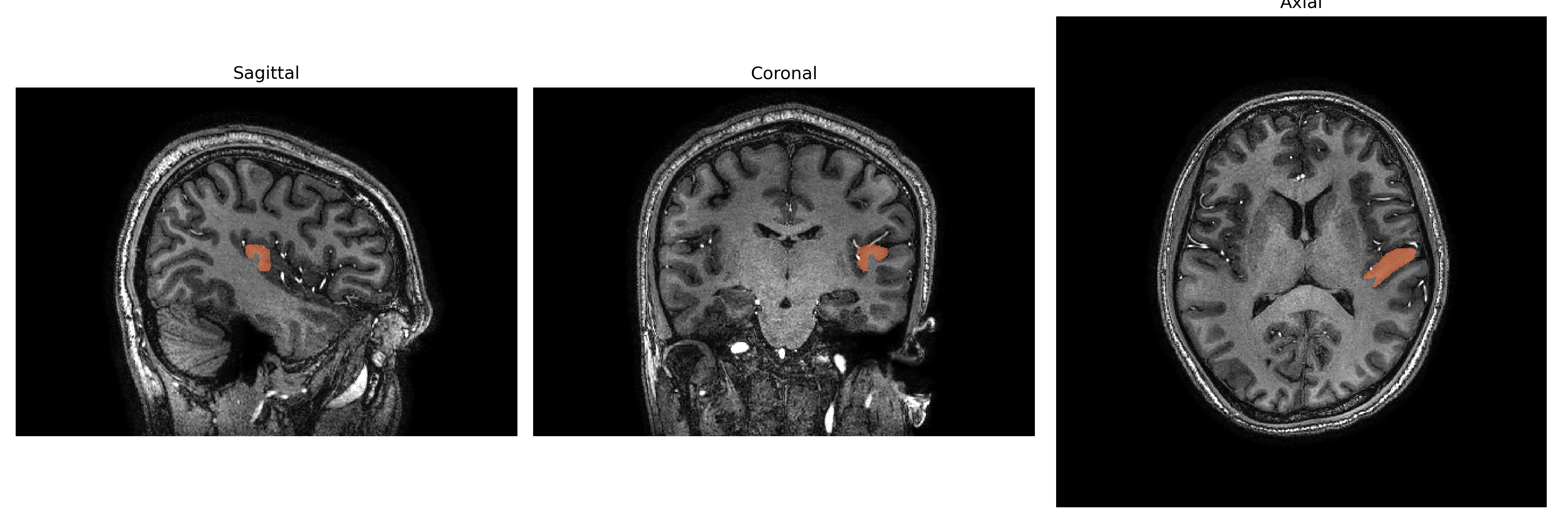
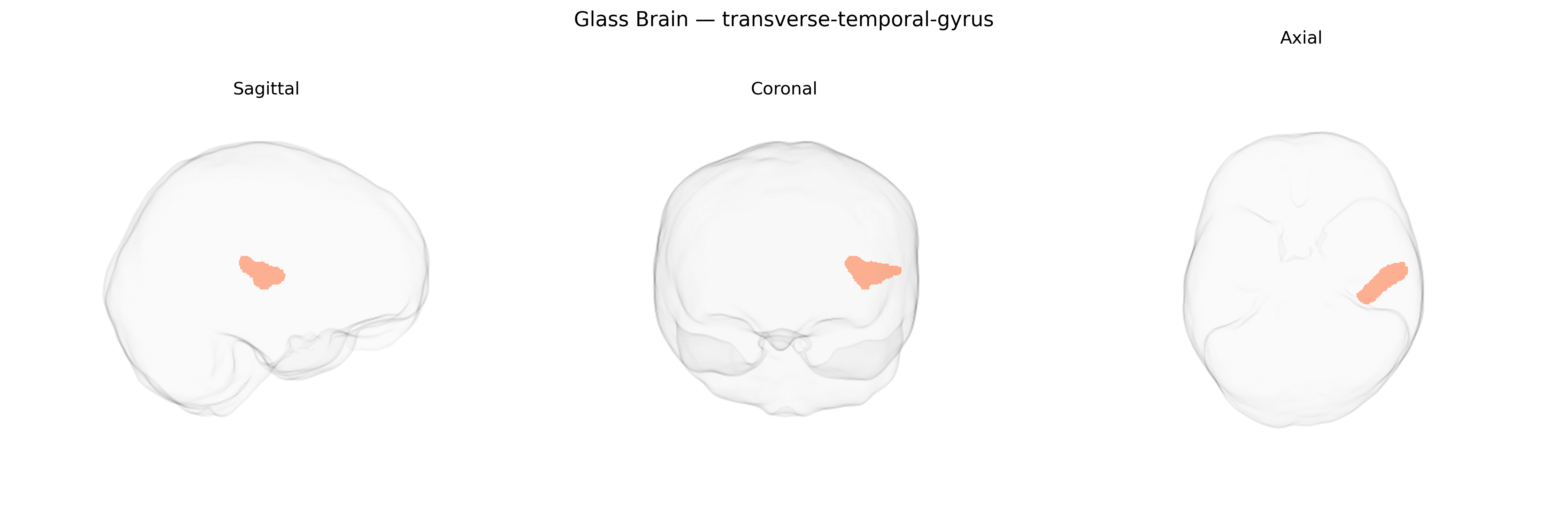
The left transverse temporal gyrus, also known as Heschl’s gyrus, is a short cortical convolution buried within the lateral sulcus on the superior surface of the temporal lobe and constitutes a major part of the primary auditory cortex (Brodmann areas 41 and portions of 42). It receives dense thalamocortical projections from the medial geniculate nucleus of the thalamus and plays a critical role in the early cortical processing of acoustic information, including sound frequency, intensity, and temporal features. In the left hemisphere, this region is particularly important for the analysis of speech sounds and phonemic structure, forming part of the core auditory network that interfaces with surrounding belt and parabelt areas and with language-related regions such as the superior temporal gyrus and planum temporale. Transverse temporal gyus
The left transverse temporal gyrus (Heschl’s gyrus), as defined in the brainCOLOR Atlas, shows genetic associations primarily through GWAS of cortical structure and auditory-related traits rather than direct brainCOLOR-specific analyses. Large-scale imaging-genetics consortia (e.g., ENIGMA, UK Biobank–based studies) have identified common variants influencing cortical surface area and thickness in primary auditory cortex, including the transverse temporal gyrus, with significant loci near genes involved in neurodevelopment and synaptic function such as PPP3R1, KIAA0586, and variants in or near MEF2C and TBR1–related pathways that regulate cortical patterning. Polygenic influences on Heschl’s gyrus morphology overlap partially with genetic architectures for language and reading abilities, musical aptitude, and speech perception, although individual loci often have small effect sizes and broad cortical impact. Variants associated with schizophrenia, bipolar disorder, and major depressive disorder have been linked to altered volume or cortical thickness in Heschl’s gyrus in imaging-genetic studies, consistent with auditory hallucinations and abnormal auditory processing in these conditions, and autism spectrum disorder–related loci show more modest but convergent associations with atypical auditory cortex development. Tinnitus- and hearing-related GWAS have implicated genes affecting cochlear and central auditory pathways (e.g., variants near KCNE1 and genes in glutamatergic and GABAergic signaling), and structural or functional alterations in the left transverse temporal gyrus often co-occur with these genetic risks, suggesting a shared vulnerability of early auditory cortex to variants regulating synaptic plasticity, neurodevelopmental patterning, and sensory processing.
Overview generated by GPT-4o (2026).
Region ID: 121
Hemisphere: Left
Atlas: brainCOLOR
Full Quality Version: Download MP4
Full Quality Version: Download MP4
Full Quality Version: Download MP4
Full Quality Version: Download MP4
Wali Sidiqyar*, Gaurav Rudravaram*, Elyssa M. McMaster, Trent M. Schwartz, Adam M. Saunders, Kurt G. Schilling, Bennett A. Landman "Introducing SPINS: A Shared Public Visualization Library of Neuroanatomical Structures." Medical Imaging with Deep Learning- short paper
This resource is licensed under CC0 1.0 Universal (Public Domain).